- What is the ACCA Manual J load calculation method?
- Why does accurate HVAC sizing matter more than you think?
- How can homeowners perform or understand an HVAC load calculation?
- HVAC load calculation methods compared
- Key Takeaways
- My take on load calculations after 20 years in Los Angeles HVAC
- LC Heating and Air Conditioning can size your system right
- FAQ
- Recommended

TL;DR:
- An HVAC load calculation accurately determines the heating and cooling needs of a home, ensuring system efficiency and comfort. The industry standard is ACCA Manual J, which accounts for multiple building factors and provides specific BTU requirements. Proper sizing based on this calculation prevents issues like short-cycling, poor humidity control, and increased energy costs.
An HVAC load calculation is the engineering process that identifies exactly how much heating and cooling your home needs to operate efficiently and comfortably. The industry standard for this process is ACCA Manual J, 8th Edition, which replaces outdated rules of thumb with a precise, code-recognized method. Getting this calculation right determines whether your system runs quietly in the background or fights your home’s conditions every single day. Understanding what is hvac load calculation puts you in a much stronger position when working with any contractor.
What is the ACCA Manual J load calculation method?
ACCA Manual J is the recognized standard method for residential load calculations in the United States. It accounts for building orientation, insulation levels, window performance, air infiltration rates, and internal heat gains from people and appliances. The output is a set of numbers measured in BTUs per hour that tells you exactly how much heating and cooling capacity your home requires. Manual J has been validated over 35 years of real-world application, and it covers roughly 600 pages of codified inputs for conduction, solar gains, infiltration, and internal loads.

What inputs does Manual J require?
A complete Manual J calculation draws on the following information:
- Building orientation — which direction your home faces affects solar heat gain through windows and walls throughout the day.
- Insulation levels — wall, attic, and floor insulation values (R-values) determine how fast heat moves in or out.
- Window performance — U-factor measures heat conduction through glass, while Solar Heat Gain Coefficient (SHGC) measures how much solar radiation passes through.
- Air infiltration rate — how much outside air leaks into your home through gaps, cracks, and penetrations.
- Internal heat gains — heat produced by occupants, lighting, electronics, and appliances adds to the cooling load.
- Climate zone data — local design temperatures from ASHRAE define the worst-case conditions your system must handle.
- Room dimensions and layout — square footage, ceiling height, and floor plan affect how loads distribute across zones.
ASHRAE design conditions are statistical norms, not absolute extremes. Designing at the 1% cooling design temperature balances comfort and equipment size. Designing for the hottest day ever recorded would produce a massively oversized system that runs poorly 99% of the time.
What does Manual J output?
Manual J produces four key numbers: total cooling load in BTU/hr (or tons), total heating load in BTU/hr, sensible heat ratio, and design airflow in cubic feet per minute. These outputs feed directly into Manual S for equipment selection and Manual D for duct design. Skipping any one of these three manuals leaves gaps in your system design that show up as comfort complaints later.
Pro Tip: Ask your contractor to show you the actual Manual J report before any equipment is ordered. A legitimate report lists every room individually, not just a single whole-house number.
Software tools like Wrightsoft and CoolCalc make Manual J calculations faster and more consistent for professionals. Both programs walk technicians through every input and flag missing data before generating a permit-ready report.
Why does accurate HVAC sizing matter more than you think?
Oversized HVAC equipment causes short-cycling, poor humidity control, increased energy costs, and reduced equipment lifespan. Short-cycling means the system reaches the thermostat setpoint quickly, shuts off, and restarts minutes later. Each startup cycle stresses the compressor and motor more than steady operation does.
The old rule of thumb sizing one ton of cooling per 400–600 square feet of floor area is the root cause of most oversized systems in American homes. That rule ignores insulation quality, window area, climate zone, and internal heat gains entirely. A well-insulated 2,000-square-foot home in Los Angeles may need significantly less capacity than a poorly insulated home of the same size in Phoenix.
Oversizing vs. undersizing: which is worse?
Oversizing is more detrimental to comfort than slight undersizing because oversized units fail to run long enough to remove moisture from the air. The result is a home that feels cold and damp at the same time. Mold risk increases, and occupants often raise the thermostat setpoint to feel comfortable, which wastes even more energy.
Undersizing carries its own risks. A system too small for the load runs continuously on the hottest days and never reaches the setpoint. That constant operation wears out components faster and drives up electricity bills. The key difference is that a slightly undersized system still dehumidifies properly during its long run cycles, while an oversized system never does.
“Load calculation is fundamentally about system performance and comfort, not just equipment size. Oversized units degrade indoor air quality through insufficient dehumidification.” — Budlong Engineering
Proper HVAC sizing can deliver meaningful energy savings compared to systems sized by the old square footage rule. The exact savings depend on your climate, home construction, and usage patterns, but the efficiency gains from correct sizing are well documented across the industry.
Sensible vs. latent load: why both matter
Every cooling load has two components. Sensible load is the heat that raises air temperature. Latent load is the moisture in the air that the system must remove through condensation. Ignoring latent load leads to clammy, unhealthy indoor environments even when the thermostat reads the right temperature. In humid climates, the latent portion of the load can be substantial. A system sized only for sensible load will leave your home feeling muggy all summer.
How can homeowners perform or understand an HVAC load calculation?
You do not need to run a full Manual J yourself, but you do need to understand the inputs well enough to verify what your contractor is doing. A simplified load calculation using seven key inputs can achieve accuracy within ±20% of a full Manual J report. That level of accuracy is useful for a rough check but not for permit-ready equipment selection.
What information should you gather before calling a contractor?
Collect the following before your consultation:
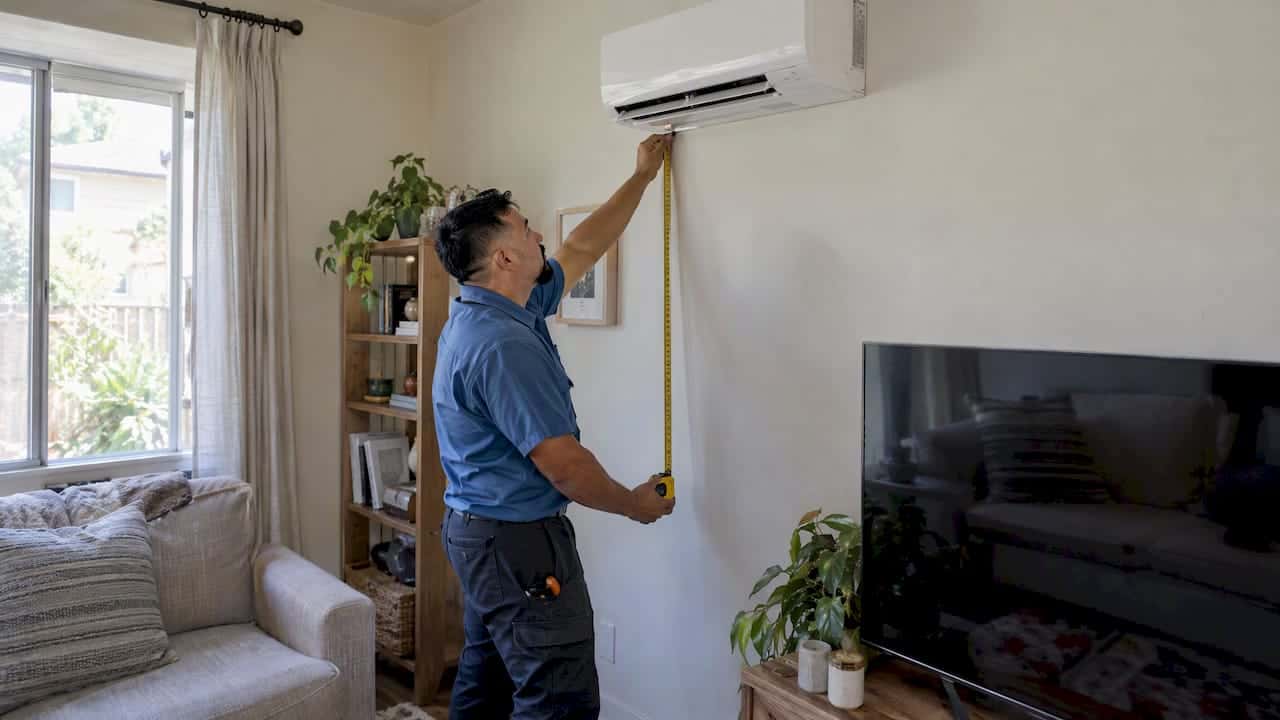
- Room dimensions — measure length, width, and ceiling height for every room.
- Window count and size — note which direction each window faces and whether the glass is single, double, or triple pane.
- Insulation details — check your attic insulation depth and wall construction type if you know it.
- Climate zone — your zip code places you in an ASHRAE climate zone that determines design temperatures.
- Occupancy — how many people regularly occupy the home affects internal heat gains.
- Appliance and electronics load — a home office with multiple computers generates noticeably more heat than an empty bedroom.
Internal heat gains from electronics and occupancy are often overlooked but critically affect load calculations and comfort outcomes. Ignoring occupant habits can cause short-cycling and humidity problems even in a correctly sized system.
Common pitfalls to avoid
Pro Tip: Never let a contractor size your system based only on your old unit’s tonnage. The old unit may have been wrong from day one, and replacing it with the same size repeats the same mistake.
The most frequent errors in residential load calculations fall into three categories:
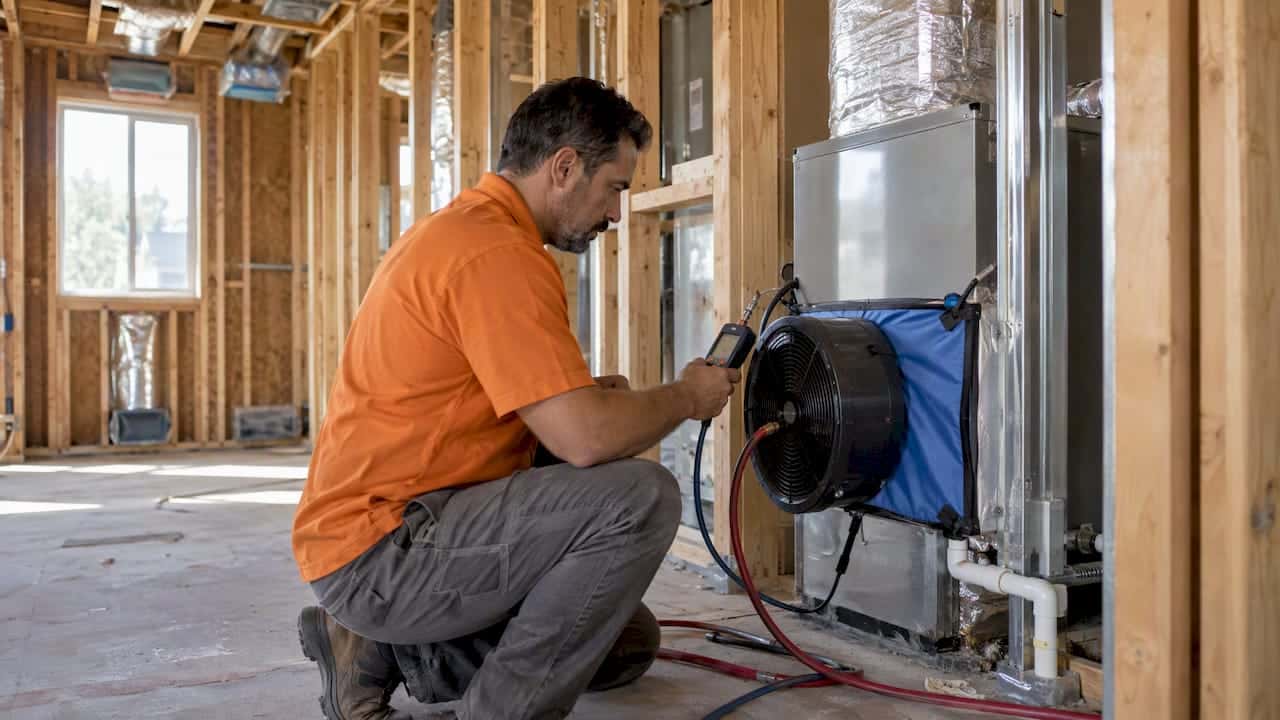
- Guessing infiltration — air infiltration without blower door testing is often underestimated, leading to significant sizing errors. A blower door test measures actual leakage and removes the guesswork entirely.
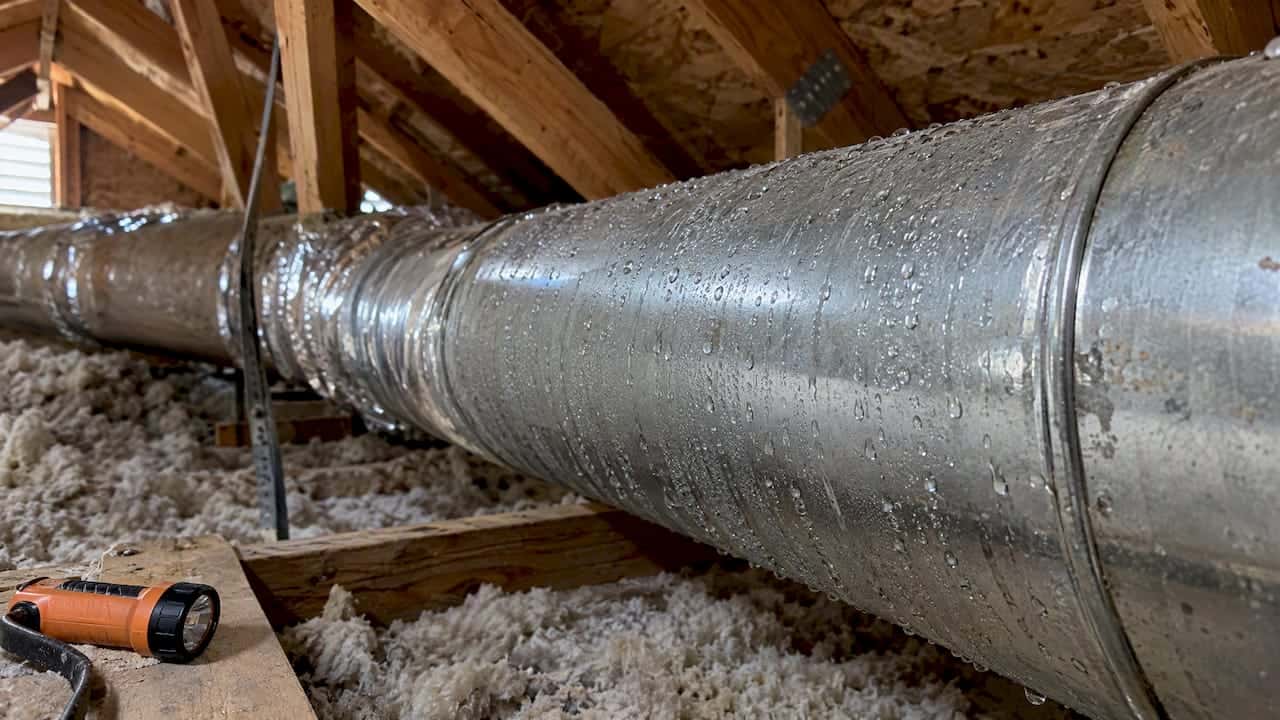
- Ignoring duct losses — ducts running through unconditioned attic spaces gain or lose heat before air reaches the living space. Failing to account for this shifts the effective load higher than the room-by-room calculation suggests.
- Asymmetric heating and cooling loads — heating and cooling loads differ markedly in many climates. A single-stage system sized correctly for cooling may be oversized for heating, making two-stage or variable-capacity equipment the better choice.
Ask your contractor directly: “Can I see the Manual J report?” A professional who cannot produce one is sizing your system by guesswork. You can also cross-reference their recommended tonnage against a residential HVAC sizing guide to check whether the numbers are in a reasonable range.
HVAC load calculation methods compared
Not every situation calls for a full Manual J. The right method depends on your goal, your budget, and whether the calculation needs to support a permit application.
| Method | Key inputs | Accuracy | Best use case |
|---|---|---|---|
| Full Manual J (Wrightsoft, CoolCalc) | All 7+ inputs, room by room | Highest | Permit applications, new installs, replacements |
| Simplified manual method | 7 core inputs, whole-house | ±20% of Manual J | DIY verification, rough checks |
| Online calculators | Square footage, climate zone | Low | Initial ballpark only, not for sizing decisions |
| Manual J + Manual S + Manual D | Full building and duct data | Highest | Complete system design including ducts and equipment |
A full Manual J run through Wrightsoft or CoolCalc is the only method that produces a permit-ready report. Equipment should be sized at 100–115% of the Manual J cooling load for single-stage systems, and 110–130% for variable-capacity systems, according to Manual S guidelines. Online calculators that ask only for square footage fall into the same trap as the old rule of thumb. They are useful for a rough sanity check and nothing more.
Integrating Manual J with Manual S and Manual D gives you a complete system design. Manual S selects the right equipment model from the manufacturer’s performance data. Manual D sizes the duct system to deliver the right airflow to every room. Skipping Manual D is one of the most common reasons a correctly sized unit still fails to heat or cool certain rooms properly.
Key Takeaways
An accurate HVAC load calculation using ACCA Manual J is the single most reliable way to size a residential system for comfort, efficiency, and long equipment life.
| Point | Details |
|---|---|
| Manual J is the standard | ACCA Manual J, 8th Edition is the code-recognized method for residential load calculations in the U.S. |
| Oversizing harms comfort | Oversized units short-cycle and fail to dehumidify, leaving homes cold and clammy simultaneously. |
| Latent load matters | Sensible heat ratio must account for moisture removal, especially in humid climates. |
| Blower door testing improves accuracy | Measuring actual air infiltration removes the biggest source of DIY sizing error. |
| Ask for the report | Always request the full Manual J report before equipment is ordered or installed. |
My take on load calculations after 20 years in Los Angeles HVAC
Most homeowners I meet think a load calculation is just about picking the right tonnage. It is not. It is about understanding how your specific home behaves thermally, and that picture is different for every house on the block.
Here is something most articles will not tell you: a slightly undersized system often performs better in real life than a correctly sized one on paper. Why? Because a system running at full capacity for longer cycles removes more moisture, maintains more even temperatures, and puts less stress on the compressor than a system that short-cycles every eight minutes. The math says one thing. The lived experience in the home says another.
The factor I see ignored most often is internal heat gains. A family of four with a home office, a gaming setup, and a kitchen that gets used every night generates a meaningfully different load than the same house occupied by one person who travels frequently. Calculators do not know your lifestyle. A good technician asks about it.
My honest advice: do not just hand the process over to a contractor and trust the number they give you. Ask to see the Manual J inputs. Ask why they chose that equipment model. Ask about sensible heat ratio and whether the selected unit handles your latent load. A contractor who welcomes those questions is one worth hiring. One who gets defensive is telling you something important.
The best system is not the biggest one. It is the one sized to match your home’s actual thermal behavior, installed with care, and supported by someone who stands behind their work.
— Leo
LC Heating and Air Conditioning can size your system right
Getting a load calculation wrong costs you money every month for the life of the system. LC Heating and Air Conditioning performs full Manual J calculations for Los Angeles homeowners, backed by over twenty years of local experience with homes ranging from historic Craftsman bungalows to modern multi-zone builds.

The team at LC Heating and Air Conditioning uses certified software, offers blower door testing coordination, and provides you with a complete report before any equipment decision is made. No pressure, no guesswork, and no surprise fees. If you want a system that actually fits your home, schedule a load calculation with LC Heating and Air Conditioning today. Same-day consultations are available across Los Angeles.
FAQ
What is an HVAC load calculation in simple terms?
An HVAC load calculation determines the exact amount of heating and cooling your home needs, measured in BTUs per hour. It replaces guesswork with a data-driven analysis of your home’s insulation, windows, climate, and occupancy.
How long does a Manual J load calculation take?
A full Manual J calculation by a certified professional typically takes one to three hours for a standard single-family home, depending on its complexity and the number of zones.
Can I do my own HVAC load calculation?
A simplified seven-input method can get you within ±20% of a full Manual J result, which is useful for a rough check. For permit applications or equipment purchases, a certified professional using Wrightsoft or CoolCalc is required.
Why does oversizing an HVAC system cause problems?
Oversized units short-cycle, meaning they reach the thermostat setpoint too quickly and shut off before removing enough moisture from the air. The result is a home that feels cold and damp, with higher energy bills and faster equipment wear.
What is the sensible heat ratio and why does it matter?
The sensible heat ratio is the proportion of the total cooling load that raises air temperature versus the portion that removes moisture. A low sensible heat ratio means your system must prioritize dehumidification, which is critical in humid climates for healthy indoor air quality.
Recommended
Leo, Owner & Lead Technician at LC Heating & Air
Leo leads LC Heating & Air as an owner-operator and holds California CSLB C-20 HVAC license #1073586. His guides focus on practical diagnostics, safe repair decisions, and clear advice for Los Angeles homeowners.