If your furnace is 18+ years old, gas bills are climbing, or repair costs are piling up, a replacement done right—with correct sizing, proper venting, and all permits—will serve you for the next 20 years. We calculate heating load by Manual J, install 80% and 96% AFUE units from top brands, and handle every permit and inspection. Most jobs finish in one day.
Furnace Repair & Heating Service in Sierra Madre
LC Heating & Air provides furnace repair in Sierra Madre — including heating repair, furnace tune-ups, home heater repair, furnace service. Whether you need same-day service, a written estimate, or help deciding between repair and replacement, our licensed technicians handle every make and model.
We repair and service all major HVAC brands in Sierra Madre, including Carrier, Lennox, Trane, Goodman, Rheem, and Bryant, and older or discontinued units. No matter the manufacturer, we diagnose the problem accurately and give you an upfront price before any work begins.
Sierra Madre sits up against the San Gabriel Mountains, and that hillside location changes how a furnace performs. Cold air drains down slopes at night, homes on canyon lots lose heat faster, and older custom houses often have ductwork that was never designed for a modern high-efficiency unit. A furnace replacement here isn't just swapping a box—it's matching the equipment to the actual heating load, the venting path, and the access realities of your property.
At LC Heating & Air, we bring 20+ years of hands-on field experience to every Sierra Madre job. Leo personally oversees the load calculation and equipment selection. We don't guess BTU numbers based on square footage. We measure. We pull permits, pressure-test gas lines, verify combustion air, and register your warranty before we leave. If you're weighing a gas furnace versus a heat pump, we'll walk through the numbers with your actual SoCalGas usage and your long-term plans.
Local HVAC considerations
Hillside residential community against San Gabriel Mountains
Hillside homes, canyon lots, estate properties, older custom homes
Slopes, narrow roads, tight mechanical areas, long line-set routes
Cold-air drainage, sun/shade variation, elevation-driven comfort differences
Furnace Challenges Unique to Sierra Madre
Homes tucked into the foothills or along narrow canyon roads see more cold-air pooling on winter nights than neighborhoods down in the valley. An improperly sized furnace that works fine in Arcadia or Monrovia may struggle to hold temperature in Sierra Madre because of elevation, tree cover, and slope orientation. We look at the actual heat loss of each room—not a generic square-footage rule—to pick the right capacity.
Older custom homes in Sierra Madre often have undersized return ducts, ancient gas lines, and venting that doesn't meet current code. A simple furnace swap without fixing those hidden issues leads to poor airflow, nuisance shutdowns, and inspection failures. We flag those problems during the assessment so you know what we're dealing with before we start.
Hillside Homes, Canyon Lots, and Tight Mechanical Closets
Sierra Madre's housing stock ranges from early-1900s bungalows to mid-century hillside homes, many with mechanical closets squeezed into odd corners, small basements, or attic spaces. Access to those spaces can be tight, and running new venting or gas lines often requires routing around framing that was never intended for modern HVAC. We plan the equipment placement and line runs before we order anything.
Estate properties and larger custom homes sometimes have zoned systems or multiple furnaces. In those cases, we evaluate whether a single high-efficiency unit with zoning dampers can replace two old units, or whether a heat pump system makes more sense for a home that also has central air conditioning. We don't push a one-size-fits-all solution.
What We Check Before Recommending a New Furnace
First, we measure static pressure across your existing ductwork. If the ducts are undersized or blocked, a new furnace won't fix the comfort problem—it will just run louder and cycle off on limit. Next, we inspect the gas line for adequate capacity and check the flue for proper draft. For high-efficiency condensing furnaces, we verify there's a path for PVC venting and condensate drainage.
We also check electrical: does the panel have room for a dedicated furnace circuit? Is the existing wiring sized correctly? And we look at combustion air openings if the furnace is in a closet or enclosed space. Each of those details affects whether the installation will pass inspection and run safely for the long haul.
Repair or Replace Your Sierra Madre Furnace?
If your furnace is less than 15 years old and a single part failed—ignitor, flame sensor, capacitor—we'll repair it and give you a reasonable expectation of its remaining life. But once the heat exchanger cracks, the burner box corrodes, or the blower motor gives out on an older unit, the math changes. A repair on a 20-year furnace often costs half of a replacement, and you're left with an old system that may fail again soon.
We tell you straight: if the repair exceeds 50% of replacement cost, or if the unit has known reliability issues, we recommend replacement. For Sierra Madre homes that also have central AC, we'll discuss whether a heat pump makes sense—it replaces both furnace and AC with one electric system. We present options with real cost projections, not pressure.
What Furnace Installation Costs in Sierra Madre
A standard 80% AFUE furnace runs $2,800 to $4,500 for Sierra Madre homes with straightforward access. A 96% high-efficiency model lands between $4,000 and $6,500. If you're replacing both furnace and AC, a complete system runs $8,000 to $18,000. Duct modifications, electrical panel upgrades, and gas line changes add cost—we quote those separately so you see the full picture.
California offers rebates that can offset some of the investment. SoCalGas has up to $800 for qualifying high-efficiency gas furnaces, and TECH Clean California offers additional incentives for heat pumps. We handle the rebate paperwork as part of the installation. Financing through GreenSky is available, including 12-month same-as-cash and 60-month fixed payment plans.
Navigating Sierra Madre's Slopes and Narrow Roads
Many Sierra Madre homes are accessed via winding roads, steep driveways, and tight garages. Our installation trucks are equipped for hillside work, and we coordinate with homeowners in advance to ensure we have a clear path for equipment delivery and material staging. We also plan for line-set routing and service clearances that work around slopes and existing landscaping.
We schedule installations Monday through Saturday, and we offer same-day emergency service when you call before noon on most days. Emergency calls are answered within 30 minutes on the phone—we give you a real-time ETA based on current job load, not a generic promise. We don't overbook, so we show up when we say we will.
Furnace Installation Mistakes We See in Sierra Madre
The most common mistake: installing a furnace without correcting return duct undersizing. A 100,000 BTU unit with a return that can only feed 60,000 BTU of airflow will short-cycle, overheat, and fail early. We've seen it on dozens of replacement jobs. Another frequent issue is improper venting—using metal flue pipe for a condensing furnace that requires PVC, or vice versa, which creates a carbon monoxide hazard.
DIY and low-bid installs often skip permits and inspections. That means no HERS testing, no combustion analysis, and no city check on gas line sizing. When we take over a home after a bad install, we frequently find gas leaks, inadequate combustion air, and equipment that was never commissioned. We catch those problems before they become emergency calls.
Combustion Safety and Carbon Monoxide Protection
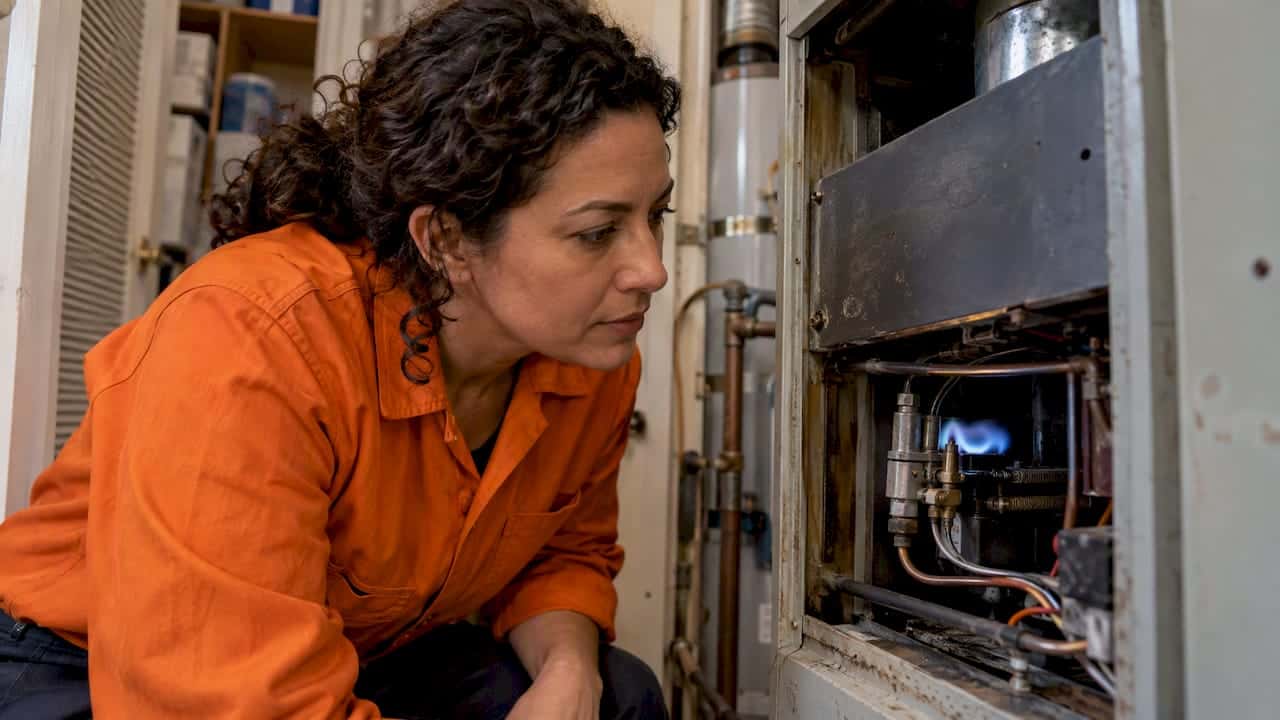
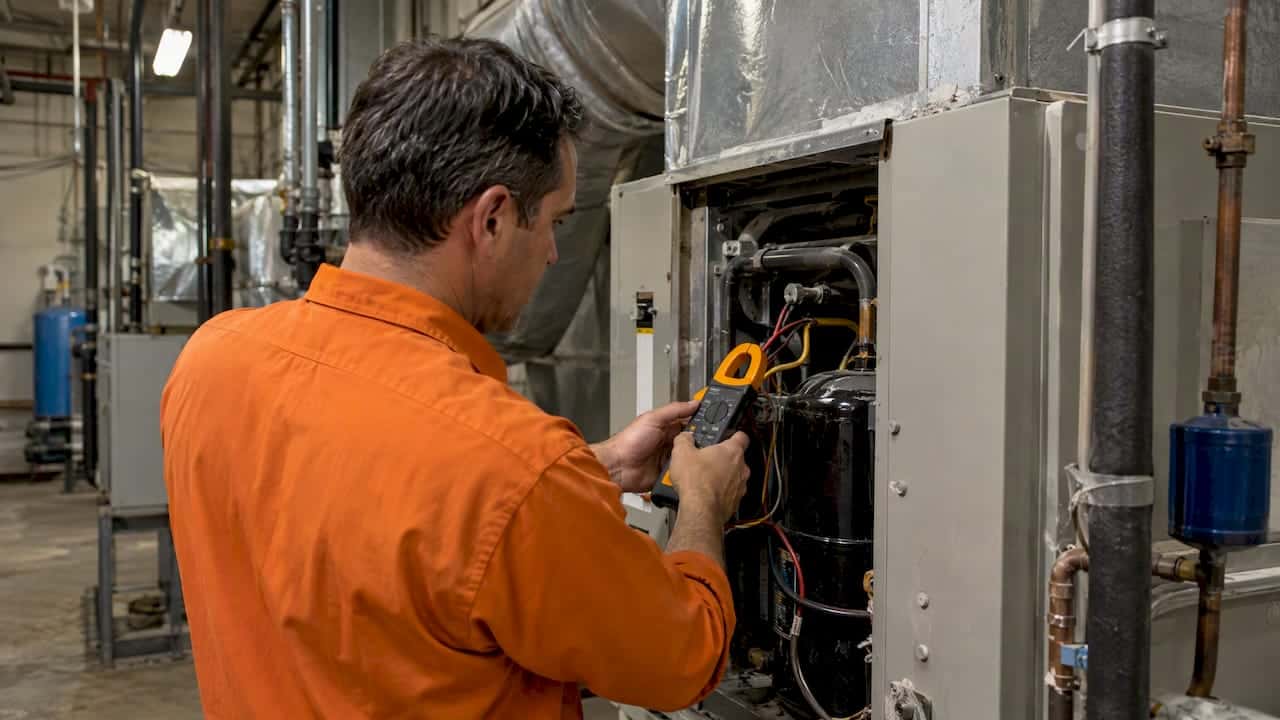
Every gas furnace we install is commissioned with a combustion analyzer. We measure CO in the flue gas, verify draft, and check for spillage at the draft diverter. If we find unsafe conditions—blocked vent, cracked heat exchanger, improper combustion air—we shut down the unit and explain what needs to be fixed before it can run safely. We never light a furnace that doesn't meet safety standards.
We also install carbon monoxide detectors when they're missing or outdated. California law requires CO alarms near sleeping areas and on every floor of a home with a gas appliance. If your current system lacks one, we'll point it out and can install a hardwired or battery-operated unit at cost. Your family's safety comes before our installation schedule.
Should You Replace Your Furnace Now?
If you're on the fence, start with these three questions: 1) Is the furnace 18 years or older? If yes, the heat exchanger is at higher risk of failure. 2) Have repairs cost more than 50% of a new unit in the last two years? If yes, replacement is likely more economical. 3) Are your gas bills climbing without a rate increase? If yes, efficiency has probably degraded.
We can come out, run a full diagnostic, and give you a written estimate for repair versus replacement with projected monthly operating costs. No charge for the diagnostic when you approve the work. If you decide to wait, we'll tell you what to watch for—unusual burner noise, yellow flame, frequent limit cycling—so you don't get caught without heat on a cold night.
How the visit works
Assessment: We inspect ductwork, gas supply, flue venting, electrical capacity, and combustion air. We measure static pressure and check for hidden issues.
Equipment proposal: We present 2–3 furnace options at different efficiency levels with projected monthly savings and available rebates. We also discuss heat pump options if applicable.
Installation: Licensed installers complete the work in one day—gas lines, venting, electrical, condensate drain—all done to code.
Commission & inspection: We fire the furnace, verify combustion CO levels, perform HERS testing if required, pass city inspection, and register your warranty.
Cost factors we review before quoting
- • 80% AFUE furnace (standard): $2,800–$4,500
- • 96% AFUE furnace (high-efficiency): $4,000–$6,500
- • Variable-speed furnace (premium): $5,500–$8,000
- • Complete system (furnace + AC): $8,000–$18,000+
- • Duct modification: $500–$3,000
- • Electrical panel upgrade: $1,200–$2,500
- • Permits and inspections included in all quotes
Useful next steps
Furnace Installation in Sierra Madre at a glance
- • LC Heating & Air is a licensed C-20 HVAC contractor — CSLB #1073586.
- • We serve Sierra Madre from our base at 509 N Fairfax Ave, Los Angeles, CA 90036.
- • Call us at (323) 970-3113 for a free written estimate before any work.
- • Emergency calls are answered within 30 minutes (phone response, not on-site arrival ETA).
- • We pull all required permits and schedule city inspections for every furnace installation.
- • Leo, owner, has 20+ years of hands-on HVAC experience; technicians are NATE-trained and EPA-certified.
- • We install 80% and 96% AFUE furnaces from Carrier, Lennox, Trane, Rheem, Goodman, and American Standard.
Our furnace installation process in Sierra Madre
Reviewed by Leo, Owner & Lead Technician
This furnace installation guide for Sierra Madre is reviewed for practical HVAC accuracy by Leo at LC Heating & Air. LC Heating & Air holds California CSLB C-20 HVAC license #1073586 and provides written estimates before approved work.
What Sierra Madre customers say about furnace installation
Verified reviews from homeowners in Sierra Madre and nearby neighborhoods who used our furnace installation service.
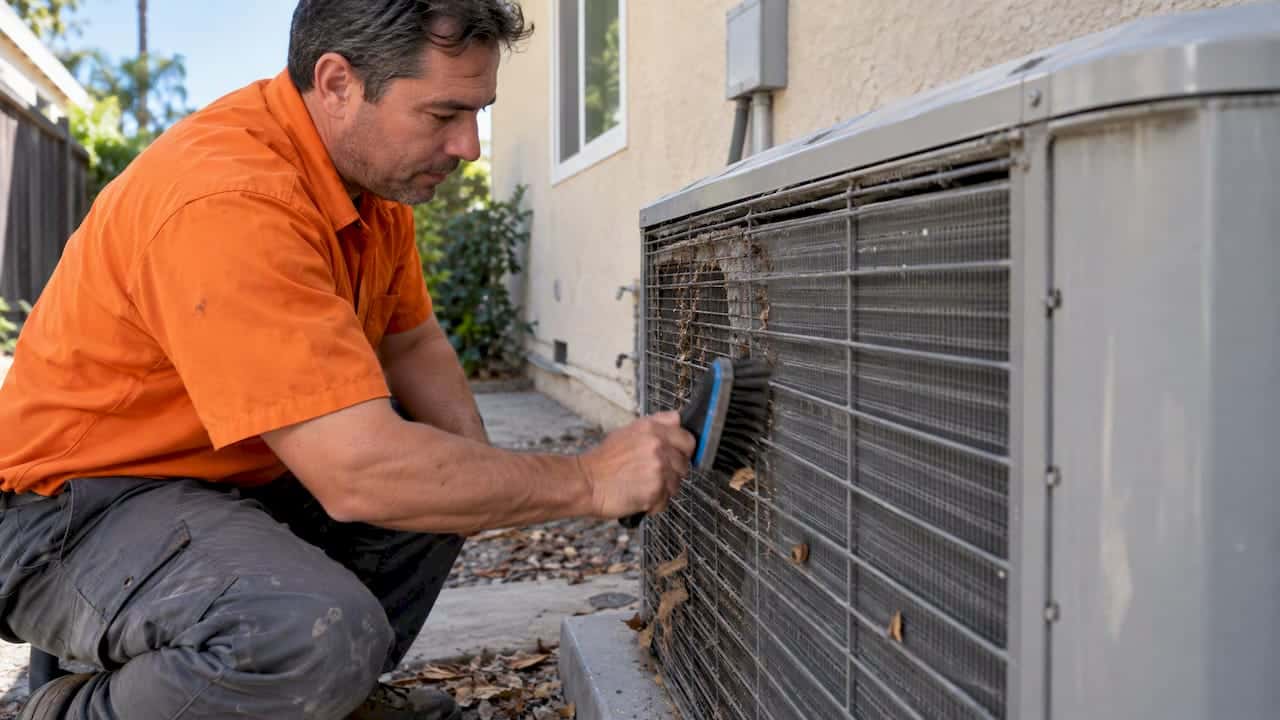
“AC wasn't cooling to setpoint even though it was running all day. LC found the condenser coils were completely clogged with cottonwood. Cleaned them on the spot and the system cooled my house 12 degrees in an hour.”
“LC replaced our entire HVAC system — new Carrier condenser, furnace, and coil. Leo walked us through every option without pressure. The install team was professional and clean. System runs perfectly and our electricity bill dropped about 30%.”
“Called LC because our CO detector went off. Their technician found a crack in the heat exchanger and immediately shut down the furnace. He explained the safety issue clearly, provided a replacement estimate, and didn't try to scare us — just facts.”