Monrovia's hillside homes and older houses often lack ductwork, making mini splits (ductless heat pumps) the smartest HVAC solution. They heat and cool a single room or your whole house through a small wall hole — no metal ducts needed. LC Heating & Air sizes and installs Mitsubishi, Daikin, Fujitsu, LG, and Carrier systems for Monrovia's foothill conditions. Call (323) 970-3113.
Mini Split Repair & Ductless AC Service in Monrovia
LC Heating & Air provides mini split repair in Monrovia — including ductless AC repair, mini split installation, ductless mini split service, mini split not cooling. Whether you need same-day service, a written estimate, or help deciding between repair and replacement, our licensed technicians handle every make and model.
We repair and service all major HVAC brands in Monrovia, including Mitsubishi, Daikin, LG, Fujitsu, Samsung, and Carrier, and older or discontinued units. No matter the manufacturer, we diagnose the problem accurately and give you an upfront price before any work begins.
Monrovia sits right at the base of the San Gabriel Mountains, which means a lot of the homes here were built before central air was standard. And with hillside lots, narrow access roads, and steep slopes, ductwork isn't something you can just add without major renovation. Mini splits solve that. They're ductless heat pumps — meaning they cool in summer, heat in winter, and connect through a three-inch hole in the wall. The outdoor unit can go on a wall bracket, a ground pad, or a flat rooftop, depending on your property.
At LC Heating & Air, we handle mini split installation for all of Monrovia — from the older bungalows near downtown to the estate homes up in the foothills. I'm Leo, and I've been doing this work hands-on for over twenty years. We install Mitsubishi, Daikin, Fujitsu, LG, and Carrier. A single-zone setup (bedroom, office, ADU) usually takes four to six hours. Multi-zone whole-house systems take a day or two. Every job includes written estimate, electrical work, refrigerant lines, and a walk-through of the controls.
Local HVAC considerations
Hillside homes, canyon properties, estate lots, older custom homes
Sun exposure, slope, wind, tree cover, elevation changes create room-by-room comfort differences
Ladder access, line-set routing, service clearances planned around slopes and narrow roads
Common Monrovia Mini Split Issues
Monrovia's hillside and canyon properties create specific problems for ductless installation that you don't see on a flat lot. Sun exposure varies dramatically from one side of the house to the other, so a single indoor head in the wrong spot can leave a room too hot while the unit runs constantly. We've also seen plenty of cases where the outdoor unit is placed in full afternoon sun on a south-facing slope, which kills efficiency and shortens compressor life. Line-set routing through a crawlspace under a sloped house often requires extra planning to avoid kinks and maintain proper refrigerant flow.
Another local issue is access for equipment and ladders. Many Monrovia homes sit above the street with steep driveways and narrow side yards. That can make it tough to get the outdoor unit to its final spot. We plan the delivery path during the site assessment so the installation team knows what to expect. Condensate drainage also needs care — on a hillside, the drain line has to account for grade changes so water doesn't pool under the house or freeze on an exposed line in winter.
Monrovia Housing Stock and Mini Split Fit
Monrovia's housing stock is a mix of early 20th-century Craftsman bungalows, mid-century ranch homes, and newer custom estate properties in the foothills. Most of the older homes were built with no ductwork — they relied on window units, radiators, or nothing at all. Adding central ductwork to a Craftsman bungalow would mean tearing into plaster walls, losing closet space, and dropping ceilings in rooms that were designed with high ceilings for passive cooling. A mini split is a much cleaner solution: wall mount the indoor head, run the line set to the back of the house, and mount the outdoor unit out of sight.
For the newer estate homes on larger lots, homeowners often want whole-house comfort without the look of wall-mounted heads. In those cases we can install ceiling cassettes or floor-mounted units that blend with the room design. Multi-zone systems with four or five heads can cover 2,000 square feet with individual temperature control in each zone. We also see a lot of ADU and garage conversions in Monrovia — those nearly always get a single-zone mini split because they're independent living spaces that weren't part of the original HVAC design.
How We Diagnose a Mini Split Installation
When we assess a Monrovia property for a mini split, the first thing I do is walk the house and measure every room that needs conditioning. I'm not just taking square footage — I'm checking ceiling height, window orientation, insulation quality, and any heat sources like big south-facing windows or a kitchen range. Hillside homes often have a basement or crawlspace where we can run refrigerant lines, and I look at that route to make sure there's enough clearance and no sharp bends that would restrict flow. I also check the electrical panel to confirm there's capacity for the new circuit.
After that, I head outside to pick the outdoor unit location. It has to be on a solid surface — a concrete pad, a wall bracket that's bolted into framing, or a flat section of roof. I look for shade or partial shade, good airflow, and a spot where the condensate can drain downhill without puddling. Then I plan the indoor head placement: it should be high on the wall, with nothing blocking the air discharge, and positioned to throw air across the room instead of hitting a couch or curtain. That's the basic diagnostic before we even load equipment.
Repair Your Old Mini Split or Replace It?
If you already have a mini split that's getting old or acting up, I'll tell you straight: repair is worth it if the compressor and the outdoor coil are in good shape. Common fixes like replacing a run capacitor, cleaning the blower wheel, or patching a refrigerant leak are usually under $500 and can buy you years of life. The same issues we see on central air conditioners — failed capacitors, leaking service valves, clogged condensate drains — also happen on mini splits. But if the compressor is gone, the refrigerant circuit has a major leak, or the main control board is dead, replacement is often the better bet.
Age matters here. A well-maintained mini split lasts about 15 to 20 years. After 12 years, parts availability starts to shrink, and those obsolete boards or compressors can be expensive to hunt down. Newer units — especially inverter-driven heat pumps — hit 24 to 30 SEER efficiency, compared to 9 or 10 SEER for one from 2005. In LA's climate, that efficiency difference can cut your cooling costs by more than half. If your old system is from before 2015 and you're facing a major repair, I'd lean toward replacement. I'll always explain the numbers so you can decide.
Cost and Rebate Factors for Monrovia Installations
Pricing for a mini split in Monrovia depends on the number of zones, the brand, and the installation complexity. A single-zone 9,000 BTU system for a small ADU or bedroom typically runs $3,500 to $5,000 installed. A 12,000 BTU unit for a standard living room falls between $4,000 and $5,500. Go up to 18,000 BTU for a larger open floor plan, and you're looking at $4,500 to $6,500. For multi-zone whole-house systems, a 2-zone setup runs $8,000 to $12,000, a 3-zone runs $10,000 to $16,000, and a 4- to 5-zone system for a whole home without ducts costs $14,000 to $22,000. A ceiling cassette upgrade adds $500 to $1,000 per zone.
The good news: California rebates can knock a meaningful chunk off that price. Heat pump mini splits qualify for TECH Clean California incentives up to $3,000, plus SCE rebates up to $1,200 per ton. Federal IRA tax credits also apply on qualifying systems. We check which programs apply during your estimate and handle the paperwork. If the numbers still feel steep, we offer financing through approved lending partners — including promotional rates on larger systems. I'll review your options in person so there are no surprises.
Access and Scheduling in Monrovia
Monrovia's hillside and canyon properties often have tight access — narrow streets, steep driveways, and backyards that are only reachable through the house. Our installation team plans for that before the first drill bit spins. We'll measure the path for the outdoor unit, check if we need a dolly or a hoist, and confirm the ladder reach. If there's a gate or a locked access point, we coordinate so no one gets stuck. We also schedule for the specific time of day when the sun is at the right angle — especially for outdoor unit placement on a south slope.
For emergency heating or cooling situations, we answer the phone within 30 minutes — but that's call pickup, not on-site arrival. For planned installations, we typically schedule within a week. Same-day service options are available for urgent repairs. We also work with building inspectors in Monrovia to get the final sign-off when permits are required, which we handle as part of the job. If you need to coordinate with your GC or an electrician, we'll loop them in.
Common Mistakes We See in Monrovia Installations
The biggest mistake I see is poor indoor head placement. Someone puts the head behind a door or above a tall cabinet, and the air never reaches the far side of the room. That means the unit runs longer, costs more on the electric bill, and leaves the room uncomfortable. Another common error is undersizing the system. A tiny 9,000 BTU head in a big south-facing living room in Monrovia will run nonstop and never catch up, especially on a 95-degree July afternoon. We calculate the load properly — no guessing.
Outdoor unit placement is another problem area. I've seen units tucked into a tight corner with no clearance on the sides or facing into a wall. That kills airflow. The compressor overheats, efficiency drops, and you get a shorter lifespan. On hillside properties, we also find refrigerant lines pinched or kinked where they go around a corner. A kinked line can cause a restriction that makes the system sound weird and cools poorly. We avoid that by planning the line-set path in advance and using a straight pipe when we can.
Health and Safety Considerations with Mini Splits
Mini splits, being heat pumps, don't burn anything — no gas, no oil. That means no carbon monoxide risk, no combustion byproducts, and no need for a flue or chimney. For Monrovia homes with elderly residents, kids, or anyone with respiratory conditions, that's a significant advantage. The indoor unit relies on a sealed refrigerant circuit, so there's no flame, no pilot light, and no gas line to leak. Also, because they're ductless, you don't have to worry about duct leaks pulling attic dust or rodent droppings into your living space.
The refrigerant in modern mini splits is R-410A (or in some newer models, R-32), which is non-ozone-depleting. Proper installation includes a pressure test and evacuation to ensure there are no leaks. Condensate drainage is another safety point: if the drain line clogs or back-pitches, water can drip into the wall cavity or onto the floor, causing mold or structural damage. We install drain pans and safety switches where needed. The outdoor unit should be on a solid surface with good drainage to avoid standing water issues.
How to Decide on a Mini Split in Monrovia
If your Monrovia home doesn't have ductwork, a mini split is the most practical way to get heating and cooling without a major renovation. It works for a single room, an ADU, or a whole house with multiple indoor heads. The key question is how many zones you need. One or two rooms? A single-zone system covers that. Whole house? A multi-zone system with 3-5 heads can cover 2,000 square feet with individual temperature control.
Consider your budget: single-zone runs $3,500 to $5,000 installed; whole-house multi-zone is $10,000 to $22,000, but you can offset that with CA rebates up to $3,000 plus federal tax credits. If you already have ductwork in good shape, a central heat pump may be more cost-effective. If you're adding a garage conversion or an ADU, a mini split is almost always the best path. We'll walk through the options on your site visit.
Rebates and financing can make the project fit your cash flow. We check TECH Clean California, SCE rebates, and IRA tax credits during your estimate, and help with the paperwork. Financing through approved lenders is available for qualifying customers, including promotional terms on larger systems.
How the visit works
We evaluate wall locations, electrical panel capacity, and outdoor unit placement for optimal performance.
We calculate room-by-room loads and select the right number of indoor heads and outdoor unit capacity.
We mount indoor heads, install the outdoor unit, run refrigerant lines, and make all electrical connections.
We test the system in both heating and cooling modes, then walk you through the remote and Wi-Fi controls.
Cost factors we review before quoting
- • Number of zones: single-zone vs 2-5 zone systems
- • Equipment brand: Mitsubishi, Daikin, Fujitsu, LG, Carrier
- • Installation complexity: hillside access, line-set length, electrical upgrades
- • Ceiling cassette upgrades: adds $500–$1,000 per zone
- • California rebates: TECH Clean California up to $3,000, SCE up to $1,200/ton, federal IRA tax credits
Useful next steps
Mini Split Installation in Monrovia at a glance
- • Provider: LC Heating & Air
- • Location: 509 N Fairfax Ave, Los Angeles, CA 90036
- • Phone: (323) 970-3113
- • License: CSLB #1073586 (C-20 HVAC, insured)
- • Service: Mini split installation for Monrovia hillside homes, ADUs, garages, and whole-house multi-zone
- • Estimate: In-home written estimate before work begins; no obligation
- • Emergency: Calls answered within 30 minutes (phone response, not on-site ETA)
- • Founded: 2020; Leo has 20+ years hands-on HVAC experience
Our mini split installation process in Monrovia
Reviewed by Leo, Owner & Lead Technician
This mini split installation guide for Monrovia is reviewed for practical HVAC accuracy by Leo at LC Heating & Air. LC Heating & Air holds California CSLB C-20 HVAC license #1073586 and provides written estimates before approved work.
What Monrovia customers say about mini split installation
Verified reviews from homeowners in Monrovia and nearby neighborhoods who used our mini split installation service.
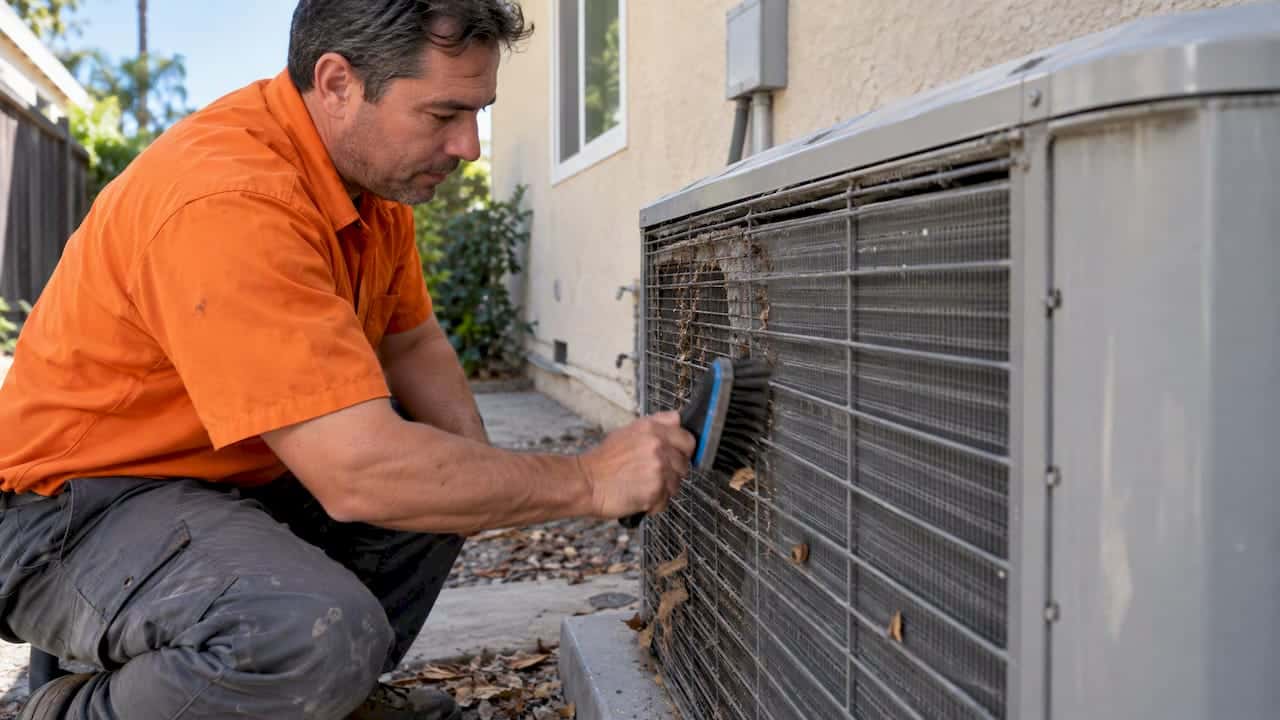
“AC wasn't cooling to setpoint even though it was running all day. LC found the condenser coils were completely clogged with cottonwood. Cleaned them on the spot and the system cooled my house 12 degrees in an hour.”
“LC replaced our entire HVAC system — new Carrier condenser, furnace, and coil. Leo walked us through every option without pressure. The install team was professional and clean. System runs perfectly and our electricity bill dropped about 30%.”
“Called LC because our CO detector went off. Their technician found a crack in the heat exchanger and immediately shut down the furnace. He explained the safety issue clearly, provided a replacement estimate, and didn't try to scare us — just facts.”