Practical, honest mini split repair for Hollywood Hills properties. We diagnose, provide a written estimate, and fix your system right the first time. Call LC Heating & Air at (323) 970-3113.
Mini Split Repair & Ductless AC Service in Hollywood Hills
LC Heating & Air provides mini split repair in Hollywood Hills — including ductless AC repair, mini split installation, ductless mini split service, mini split not cooling. Whether you need same-day service, a written estimate, or help deciding between repair and replacement, our licensed technicians handle every make and model.
We repair and service all major HVAC brands in Hollywood Hills, including Mitsubishi, Daikin, LG, Fujitsu, Samsung, and Carrier, and older or discontinued units. No matter the manufacturer, we diagnose the problem accurately and give you an upfront price before any work begins.
Living in the Hollywood Hills means dealing with unique challenges, from steep slopes and narrow access to the specific way sun and wind hit your property. When your mini split system stops working, you need a technician who understands how these factors affect your equipment. At LC Heating & Air, I don't just look at the unit; I look at how it’s installed and why it’s failing.
I’m Leo, and I run LC Heating & Air. I believe in being plain-spoken and honest about what’s going on with your HVAC. If your system is worth repairing, I’ll tell you. If the pattern of failure points toward a replacement, I’ll explain why. We provide written estimates before any work begins, so you know exactly what you’re paying for.
Local HVAC considerations
Common Mini Split Issues in Hillside Homes
In the Hollywood Hills, I see a lot of the same issues. Often, it’s a simple case of a clogged condensate drain line causing water to drip from the indoor head. Because many homes here have complex line-set routing due to the architecture, these drains can get backed up if they aren't maintained. I also see frequent communication errors between the indoor and outdoor units, which can be caused by electrical issues or just a loose connection in the wiring.
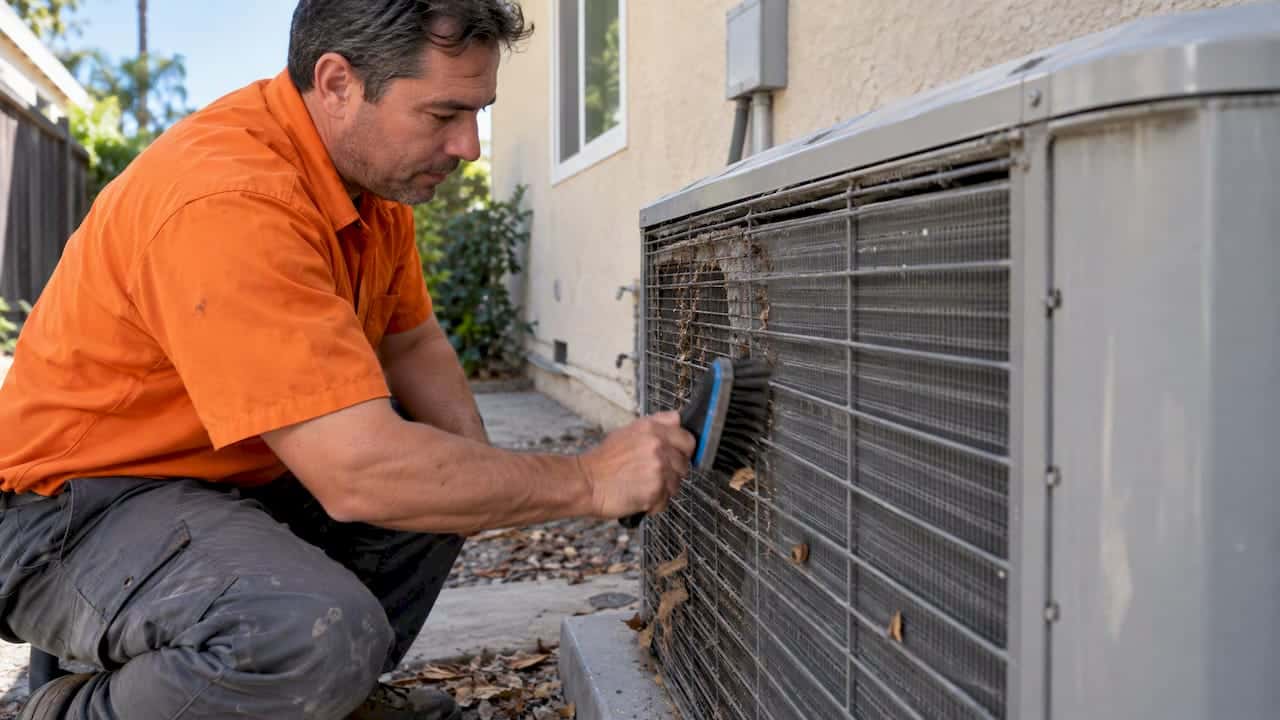
Another pattern I see involves airflow. If your unit is blowing air but not cooling, it’s often a dirty filter or a clogged indoor coil. In these hillside environments, dust and debris can accumulate quickly. If the system is running but not maintaining temperature, it’s usually cycling on and off because it can’t breathe. I check these basics first before assuming it’s a major compressor failure.
Working with Hollywood Hills Architecture
The Hollywood Hills has a mix of older custom homes and modern canyon properties. This means your mini split might be tucked into a tight mechanical area or mounted on a wall with difficult ladder access. I’m used to working in these spaces. Whether your equipment is on a steep slope or requires careful line-set routing, I plan the service to ensure we can reach it safely and effectively.
I also keep in mind the climate here. Sun exposure and elevation changes mean that one room might be significantly hotter than another. If your system is struggling, it might be a sizing issue or a placement problem. I look at the whole picture—not just the error code on the display—to make sure the repair actually solves your comfort problem.
My Diagnostic Process
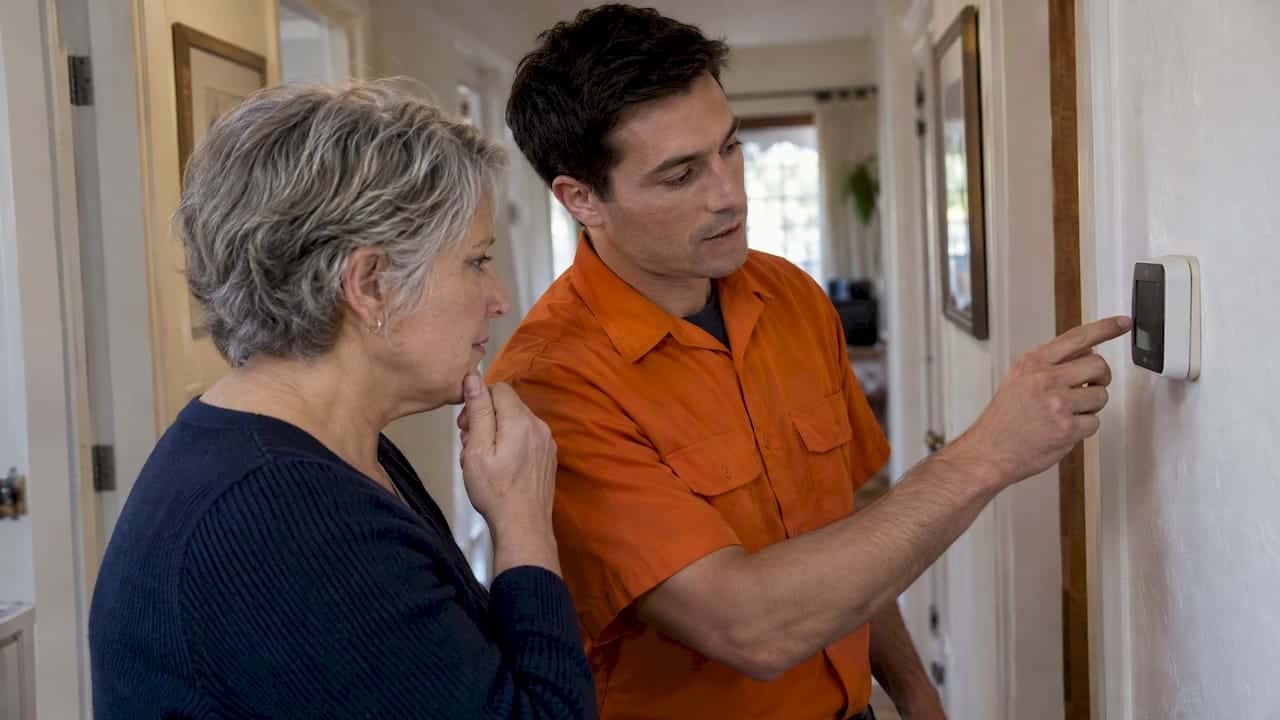
When I arrive at your home, I don't guess. I start by reading the error codes. Every major brand—Mitsubishi, Daikin, LG, Samsung, Fujitsu, and others—has specific diagnostic codes that tell me exactly what the control board is seeing. From there, I check the refrigerant levels, inspect the coil, and verify the electrical connections.
If I find a refrigerant leak, I don't just add more gas. I use electronic detectors to find the leak first. Whether it’s a flare connection that wasn't torqued correctly or a pinhole in the coil, I need to know where the refrigerant is going. Once I have the full picture, I’ll give you a written estimate for the repair. You’ll know the cost before I turn a wrench.
Repair or Replace: An Honest Assessment
Homeowners often ask me if they should just replace an older unit. My answer depends on the condition of the equipment. If it’s a high-quality brand like Mitsubishi or Daikin and the repair is straightforward—like a control board or a fan motor—it’s usually worth fixing. These systems can last 15 to 20 years if they’re maintained.
However, if the system is leaking refrigerant from the indoor coil or the compressor is failing, the cost of the repair might be close to a new installation. In those cases, I’ll be upfront with you. I won’t push you toward a new system unless it’s the most practical, long-term decision for your home.
Understanding Repair Costs
I believe in transparent pricing. A standard diagnostic visit is $125–$175. If your unit needs a repair, you’re looking at anywhere from $175 to $650 depending on the part and the labor involved. For example, clearing a condensate drain is a quick, inexpensive fix, while replacing a reversing valve or a control board takes more time and parts.
I provide a flat price for the repair, so you don't have to worry about the clock ticking while I work. My goal is to get your system back up and running as efficiently as possible without any hidden surprises.
Scheduling Your Service
I know that when your AC goes out in the Hollywood Hills, you don't want to wait. I carry common parts for most major mini split brands on my truck, which helps me provide same-day service for many of the calls I get in LA County. Because of the winding roads and steep driveways in the hills, I always confirm access details when we schedule your appointment.
Give us a call at (323) 970-3113. We’ll get you on the schedule and make sure we have the right information to get to your property safely.
Mistakes to Avoid
The biggest mistake I see is ignoring the small signs. If your unit is making a rattling noise or dripping water, don't wait for it to stop working entirely. A small, inexpensive repair today can prevent a much larger, more expensive failure later. Also, don't try to reset error codes by flipping the breaker and hoping for the best. If the code comes back, the underlying fault is still there. Let me take a look so we can fix the root cause.
Safety and Maintenance
Your HVAC system affects the air quality in your home. A clean coil and a clear drain line prevent mold and mildew growth, which is important for your health. I always inspect the indoor head condition while I’m there. Regular maintenance—mostly just keeping your filters clean—is the single best thing you can do to extend the life of your mini split.
Making the Right Choice
When you’re deciding between a repair and a replacement, consider the age of your system and how well it has been maintained. If you’ve been diligent with cleaning your filters and keeping the area around the outdoor unit clear, your system likely has plenty of life left.
If you’re unsure, I’m happy to come out, inspect the unit, and give you my honest opinion. I’m not here to sell you a new system; I’m here to make sure your home is comfortable. If a repair makes sense, I’ll do it. If it doesn't, I’ll explain exactly why.
How the visit works
We read error codes, test refrigerant levels, inspect the coil and drain, and check electrical connections to identify the specific failure.
We explain the fault clearly and provide a flat repair price before any work begins.
We complete the repair using quality parts matched to your specific brand and model.
We run the unit through a full heating and cooling cycle and confirm the fault has been resolved.
Cost factors we review before quoting
- • Complexity of the repair
- • Availability of replacement parts
- • Accessibility of the indoor or outdoor unit
- • Refrigerant type and leak location
Useful next steps
Mini Split Repair in Hollywood Hills at a glance
- • Mini Split Repair provider: LC Heating & Air
- • Location served: Hollywood Hills, CA 90068
- • License: CSLB C-20 #1073586
- • Phone: (323) 970-3113
- • Estimate: written estimate before approved work
- • Emergency calls answered within 30 minutes (24/7)
Our mini split repair process in Hollywood Hills
Reviewed by Leo, Owner & Lead Technician
This mini split repair guide for Hollywood Hills is reviewed for practical HVAC accuracy by Leo at LC Heating & Air. LC Heating & Air holds California CSLB C-20 HVAC license #1073586 and provides written estimates before approved work.
What Hollywood Hills customers say about mini split repair
Verified reviews from homeowners in Hollywood Hills and nearby neighborhoods who used our mini split repair service.
“Had LC install a Daikin mini split in our 1940s bungalow that never had AC. The work was clean, the unit is incredibly quiet, and our bedroom finally stays cool in summer. Highly recommend.”
“We converted our garage into an ADU and needed HVAC. LC installed a Mitsubishi single-zone mini split — permits, electrical, everything. The unit is so quiet you can barely hear it running. Our tenant loves it.”
“Got a 3-zone Daikin system for our craftsman home — bedrooms upstairs, living room downstairs. Each room has its own temperature control and the monthly electric bill is actually lower than our old window units combined.”