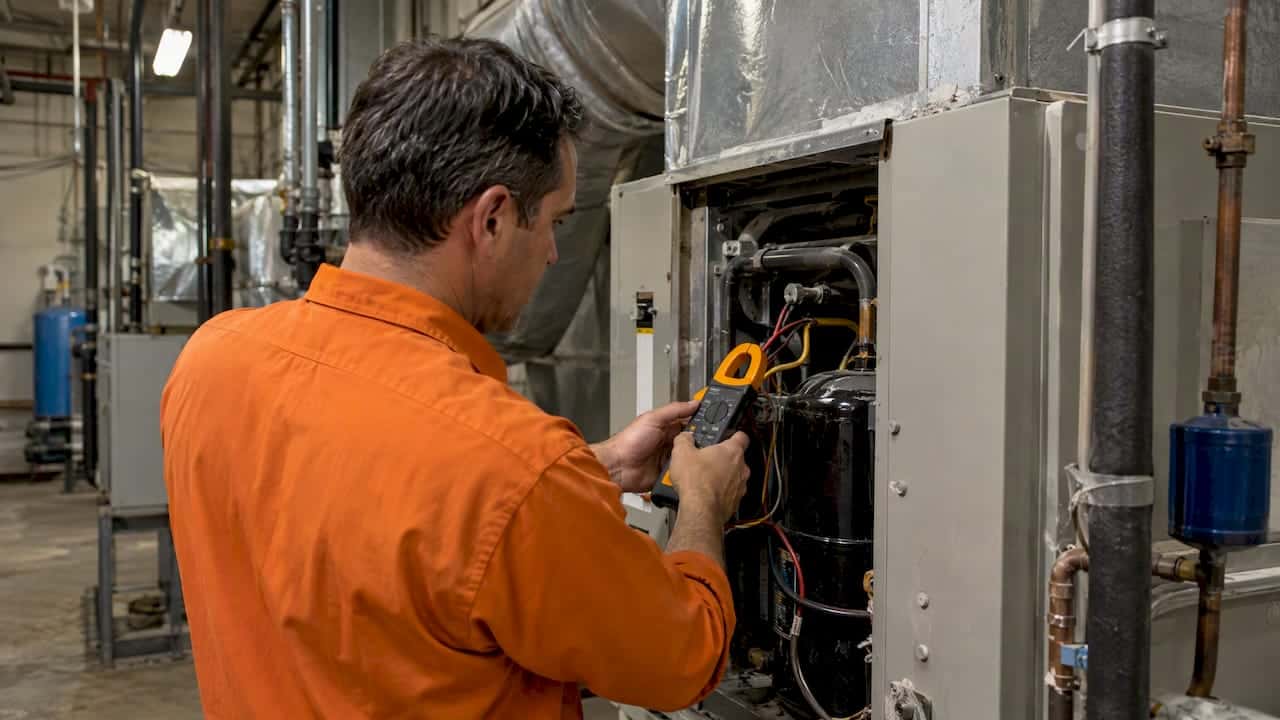
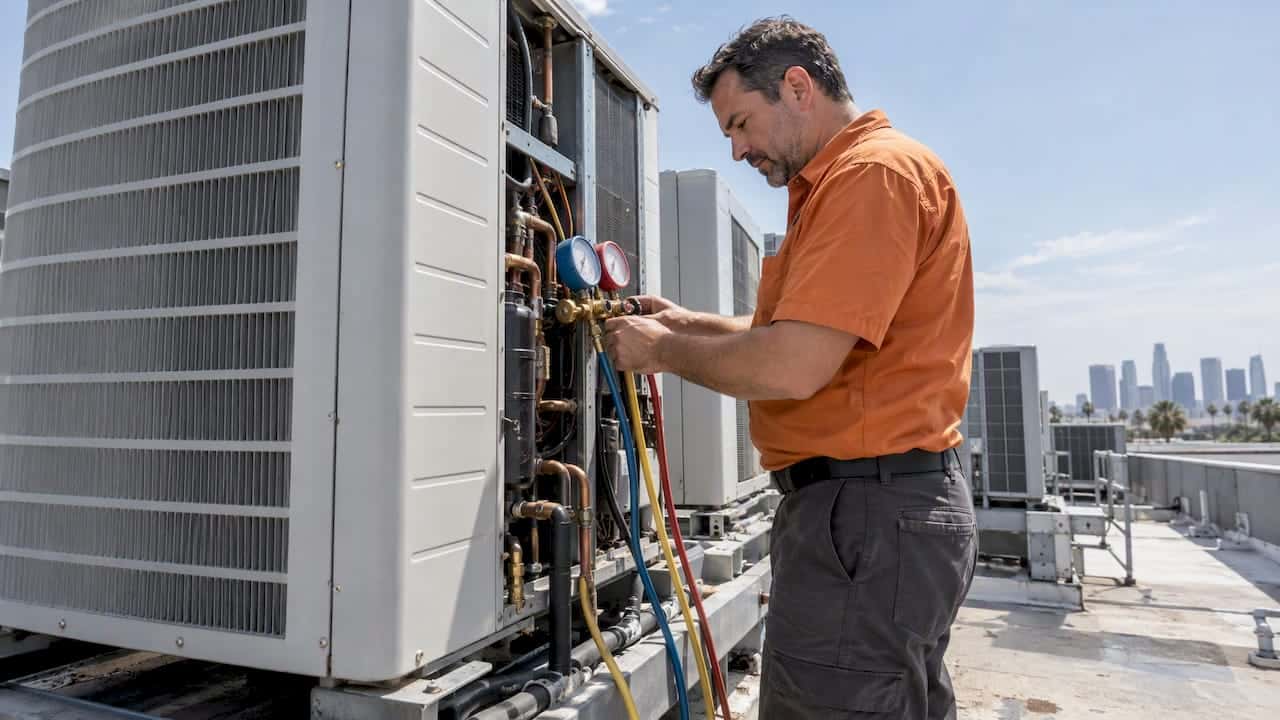
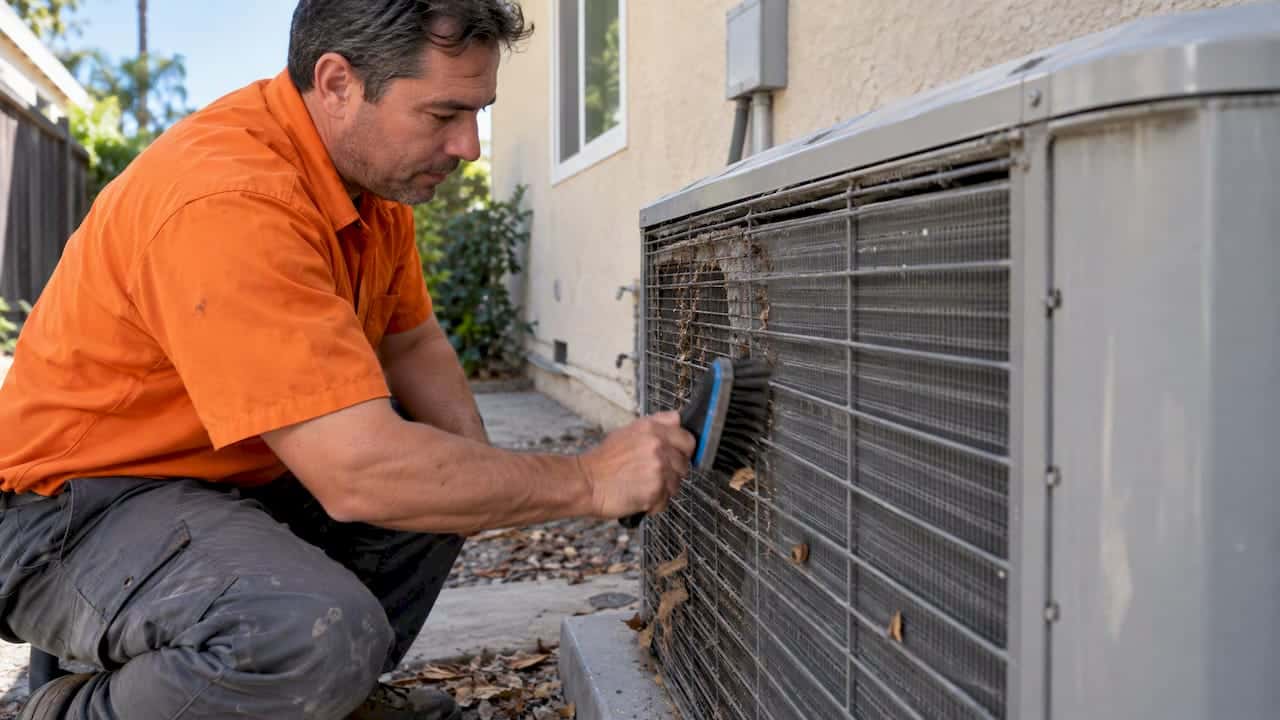
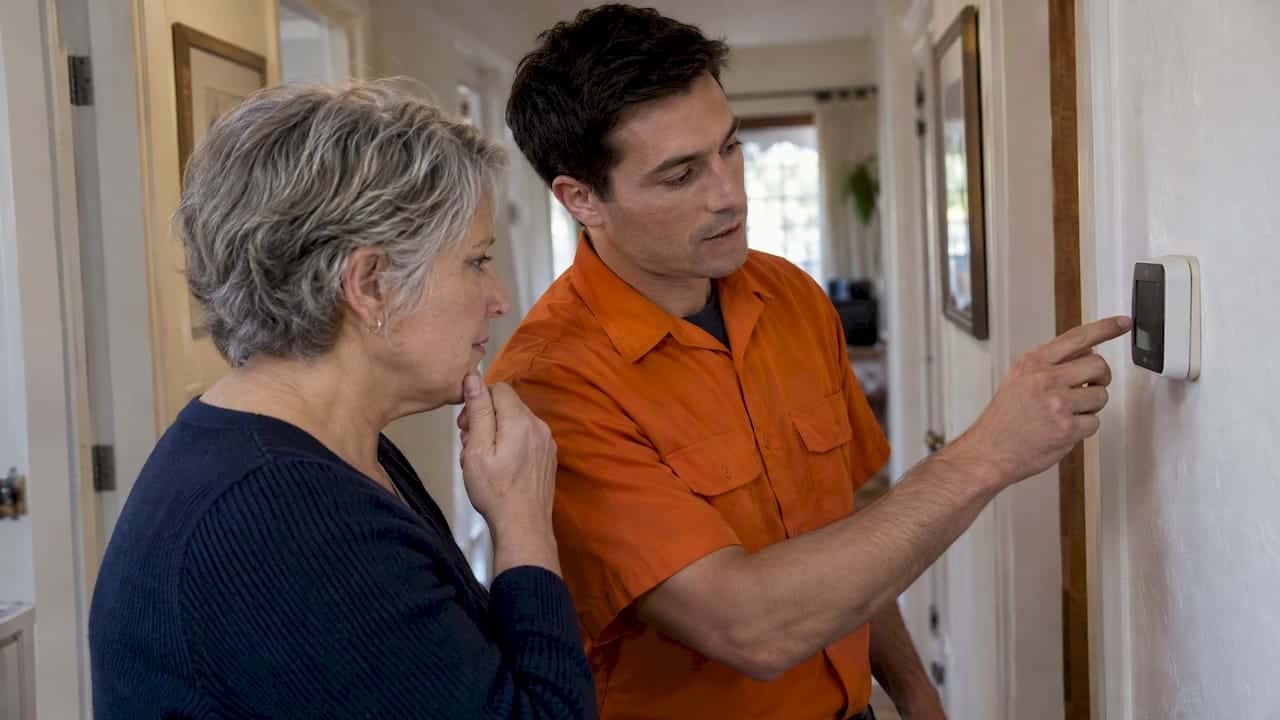
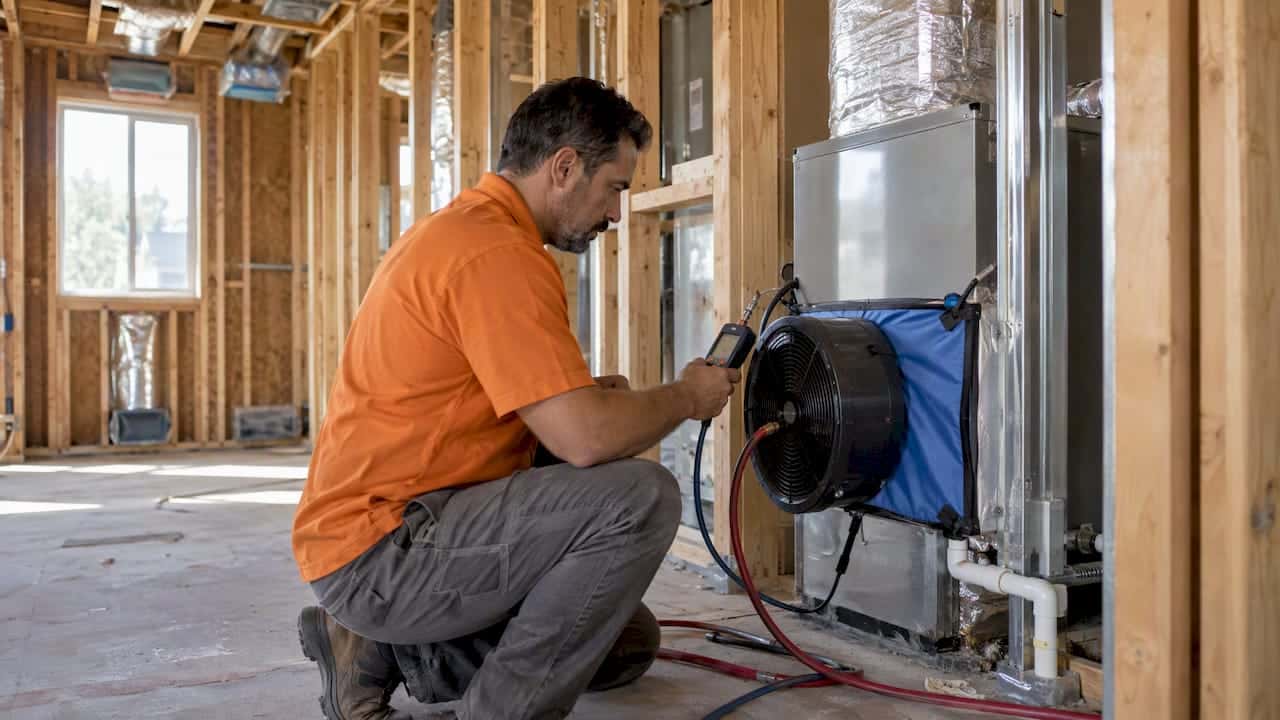
If your heating and cooling system is 12–15 years old, replacing both together often saves you money and prevents future breakdowns. We provide full HVAC replacement with proper load calculation, duct evaluation, and commissioning. We include heat pump options and help you apply for California rebates. We’ll give you an honest recommendation for your Eagle Rock home.
HVAC Repair & Service in Eagle Rock
LC Heating & Air provides HVAC service in Eagle Rock — including HVAC services near me, HVAC repair and service, heating and air conditioning, HVAC system repair. Whether you need same-day service, a written estimate, or help deciding between repair and replacement, our licensed technicians handle every make and model.
We repair and service all major HVAC brands in Eagle Rock, including Carrier, Lennox, Trane, Goodman, Daikin, and Mitsubishi, and older or discontinued units. No matter the manufacturer, we diagnose the problem accurately and give you an upfront price before any work begins.
Eagle Rock sits on the hills between Glendale and Pasadena, with a mix of Craftsman, Mid-Century, and newer homes. Its higher elevation gives it a cooler microclimate than the valley, but hillside terrain makes equipment placement and duct routing more complex. Many homes here lack central air or have aging systems. First-time AC installations are common and require careful electrical and load analysis.
At LC Heating & Air, we handle complete HVAC replacements in Eagle Rock with the thoroughness your home needs. We perform a Manual J load calculation, inspect your ductwork, and assess your electrical panel before recommending equipment. We offer heat pump alternatives and help you navigate California rebates and federal tax credits. Our goal is a system that fits your property, your budget, and your timeline.
Local HVAC considerations
Mix of single-family homes, duplexes, and small multi-family buildings from Craftsman to Mid-Century eras.
Higher elevation than surrounding areas, cooler summer microclimate. Wildfire smoke and dust affect indoor air quality.
Hillside terrain affects equipment placement, line routing, and ductwork access for replacement.
Many homes being updated require full HVAC replacement as part of larger renovation projects.
Common HVAC Issues in Eagle Rock Homes
Eagle Rock's hillside terrain creates unique challenges for HVAC installation and performance. Outdoor unit placement can be tight, line sets often need longer runs, and routing ductwork through attics or crawlspaces in older homes can be complex. The neighborhood's mix of hills and canyons means one home might get full afternoon sun while a house two blocks away is shaded, making accurate load calculation critical. Many homes were built before central air was standard, so first-time AC installations are frequent and require electrical panel assessment and careful planning for ductwork.
Another common pattern is systems that have been patched together over decades. A home might have a newer AC condenser married to an aging furnace, or ductwork added during a remodel that doesn't match the original system. These mismatched setups waste energy and cause uneven comfort. During a replacement assessment, we check the whole system — duct condition, airflow, electrical capacity, and equipment placement — so the new system performs as designed and lasts.
Eagle Rock's Housing and HVAC Considerations
Eagle Rock's housing stock is a mix of single-family homes, duplexes, and small multi-family buildings, many dating from the 1920s through 1960s. Craftsman bungalows, Spanish-style houses, and post-war ranches are common. This variety means no two replacement projects are the same. Older homes often have undersized or deteriorated ductwork, outdated electrical service, and limited space for new equipment. Remodels and additions frequently complicate system design.
The neighborhood has seen strong renovation activity over the past decade. Many buyers are updating older homes that need full HVAC upgrades as part of a larger renovation. We coordinate with general contractors and renovation teams to schedule HVAC rough-in work efficiently. Whether it's a complete gut rehab or a system replacement in an occupied home, we tailor our process to minimize disruption and get the job done right.
Our Diagnostic Process for HVAC Replacement
A thorough diagnostic assessment is the foundation of any good replacement. We start by inspecting your existing equipment, checking refrigerant pressures (if applicable), measuring airflow at the registers, and evaluating ductwork condition. We also look at the electrical panel to determine if capacity is adequate, especially if we're considering a heat pump system. We don't guess on system size — we perform a Manual J load calculation based on your home's insulation, window area, orientation, and local design temperatures for Eagle Rock.
After the assessment, we discuss what we found. We explain the condition of your current system, what needs to change, and what options make sense. We provide a written estimate that includes equipment choices, ductwork scope (if needed), permit costs, and applicable rebates. You get a clear picture before any work starts, and we answer any questions about the differences between heat pumps, gas furnaces, and traditional AC systems.
Repair vs. Replace: How to Decide
When your system is 12–15 years old, the question of repair versus replacement comes up. A good rule of thumb is to multiply the system age by the repair cost. If that number exceeds about $5,000, replacement is usually the smarter choice. For example, a 15-year-old system needing a $400 repair ($400x15=$6,000) leans toward replacement. But every situation is different. If the system has been well-maintained and the repair is small, we'll tell you honestly that a repair makes sense.
Other factors push toward replacement: rising energy bills, frequent repair calls, leaking refrigerant from an R-22 or R-410A system (with R-410A being phased down), or a furnace with a cracked heat exchanger. If you're planning to stay in your home for more than a few years, investing in a new matched system — including a heat pump option — can lower utility costs, improve comfort, and take advantage of available rebates. We help you weigh the numbers and the timing based on your specific situation.
Cost Factors and Available Rebates for HVAC Replacement
The cost of a complete HVAC replacement in Eagle Rock ranges from $6,000 to $18,000 or more, depending on equipment size, efficiency level, ductwork condition, and electrical upgrades needed. The two biggest factors are system size (tonnage for cooling, BTU for heating) and the efficiency rating (SEER2 for AC, AFUE for furnace). Higher efficiency systems cost more upfront but save more on monthly bills and may qualify for larger rebates.
California and federal incentives can significantly reduce the net cost. The TECH Clean California program offers rebates for heat pump installations, and there are SCE rebates for high-efficiency AC equipment. Federal tax credits for qualifying heat pumps can further lower your cost. We identify all applicable programs during the assessment and handle the paperwork. We also offer financing through approved lenders, including promotional options on larger replacements. Our estimates are upfront and written — no surprises.
Access and Scheduling in Eagle Rock
Eagle Rock's hillside streets and older home layouts can affect how we access your property for replacement work. We check equipment placement, line routing, and scheduling constraints before finalizing the plan. In some homes, the outdoor unit must go on a side yard or patio with narrow access. In others, ductwork runs through tight attics that require careful planning. We coordinate with you to ensure the crew has what they need while minimizing disruption to your daily life.
We offer same-day scheduling for consultations and emergency service. Emergency calls are answered within 30 minutes (phone response, not on-site arrival). During the replacement process, we aim to complete most installations in one day (6–10 hours) if ductwork modifications aren't needed. If duct repairs or electrical upgrades are required, it may take two days. We provide an accurate timeline in the proposal and keep you informed throughout.
Common Mistakes in HVAC Replacement
One of the biggest mistakes homeowners make is replacing only half the system. Installing a new AC condenser on an old furnace or air handler may seem like a short-term savings, but it often leads to mismatched performance, reduced efficiency, and warranty issues. The new equipment may not run properly with the old coil or blower. We strongly recommend replacing both systems together to avoid these problems and to get the full benefit of modern matched equipment.
Another common mistake is skipping a ductwork inspection or load calculation. Without a Manual J load calculation, you risk oversizing or undersizing the system — both of which waste energy and reduce comfort. Ignoring duct leaks can mean your new system loses 20–30% of its capacity. We always inspect ducts and include any needed repairs in the scope. Also, some homeowners forget to check electrical capacity, especially for heat pumps. We assess the panel during our evaluation to avoid surprises on installation day.
Health and Safety Considerations with HVAC Replacement
Your home's HVAC system directly affects indoor air quality and safety. Older systems with leaking ducts can draw in dust, insulation fibers, and outdoor pollutants. Wildfire smoke events in the LA area make good filtration and sealed ducts even more important. Upgrading to a new system with proper filtration (MERV 13-capable) and tight ductwork can significantly improve the air you breathe indoors. We also check for carbon monoxide risks from aging gas furnaces with potential heat exchanger cracks.
Refrigerant changes are another safety and environmental factor. The industry is phasing down R-410A in favor of lower-GWP refrigerants like R-454B. An older system that leaks refrigerant will become increasingly expensive to recharge. New systems use these newer refrigerants, which are more environmentally friendly and will be supported for years to come. During a replacement, we handle refrigerant properly and ensure your new system meets all current codes and standards.
How to Decide on Full HVAC Replacement
Making the decision to replace your entire heating and cooling system is a big investment. The clearest sign is age: if your AC is over 12 years and your furnace is over 15, replacement is worth serious consideration. But also look at repair frequency, energy bill increases, and comfort complaints. If you've called for service multiple times in the past year, you're already spending money on an aging system. A replacement eliminates those recurring costs and comes with a warranty on everything.
Also consider your plans for the home. If you're staying for 5+ years, the monthly savings from higher efficiency and the available rebates make replacement attractive. If you're selling soon, a new HVAC system can be a selling point, but we can help you decide whether a full replacement or a targeted repair makes sense for your timeline. We give you the information to make that call — no pressure, just honest advice.
How the visit works
We evaluate both your heating and cooling equipment, inspect ductwork, assess electrical service, and perform a Manual J load calculation to determine the right system size.
We present traditional split system options alongside heat pump alternatives. We include rebate information, payback analysis, and a written estimate.
A qualified crew replaces all components, updates electrical connections, and addresses ductwork issues identified in the assessment. Most installations are completed in one day.
We perform full commissioning, register warranties, document rebate paperwork, and provide a written system performance report.
Cost factors we review before quoting
- • System size and capacity (tonnage for cooling, BTU for heating)
- • SEER2 and AFUE efficiency ratings
- • Condition of existing ductwork and any required repairs
- • Electrical panel capacity and any needed upgrades
- • Type of system: traditional AC and furnace versus heat pump
- • Permit fees and inspection costs
- • Rebate availability and incentive programs
Useful next steps
HVAC Replacement in Eagle Rock at a glance
- • LC Heating & Air serves Eagle Rock (90041) for full HVAC replacement.
- • Licensed contractor: CSLB #1073586 (C-20 HVAC).
- • Emergency calls answered within 30 minutes (phone response).
- • Same-day scheduling available for consultations and emergency service.
- • Full replacement includes Manual J load calculation, duct inspection, and commissioning.
- • Heat pump options offered with California rebate support.
- • Written estimates provided before any work begins.
Our hvac replacement process in Eagle Rock
Reviewed by Leo, Owner & Lead Technician
This hvac replacement guide for Eagle Rock is reviewed for practical HVAC accuracy by Leo at LC Heating & Air. LC Heating & Air holds California CSLB C-20 HVAC license #1073586 and provides written estimates before approved work.
What Eagle Rock customers say about hvac replacement
Verified reviews from homeowners in Eagle Rock and nearby neighborhoods who used our hvac replacement service.
“Switched from gas furnace to a heat pump after talking to LC. They handled the TECH Clean California paperwork and we got a $2,500 rebate plus the federal tax credit. Total out of pocket was about $5,500 for a system that now heats and cools. Gas bill went to zero.”
“After the Eaton Fire, our ducts smelled like smoke. LC did a full cleaning — negative air pressure, rotary brushes, the works. Air quality in our home is completely different now. They were sensitive to what our neighborhood went through.”
“LC replaced our ancient wall furnace with a proper ducted system. They designed the ductwork from scratch for our bungalow. Took three days and the result is better than I expected — even heat throughout the whole house.”