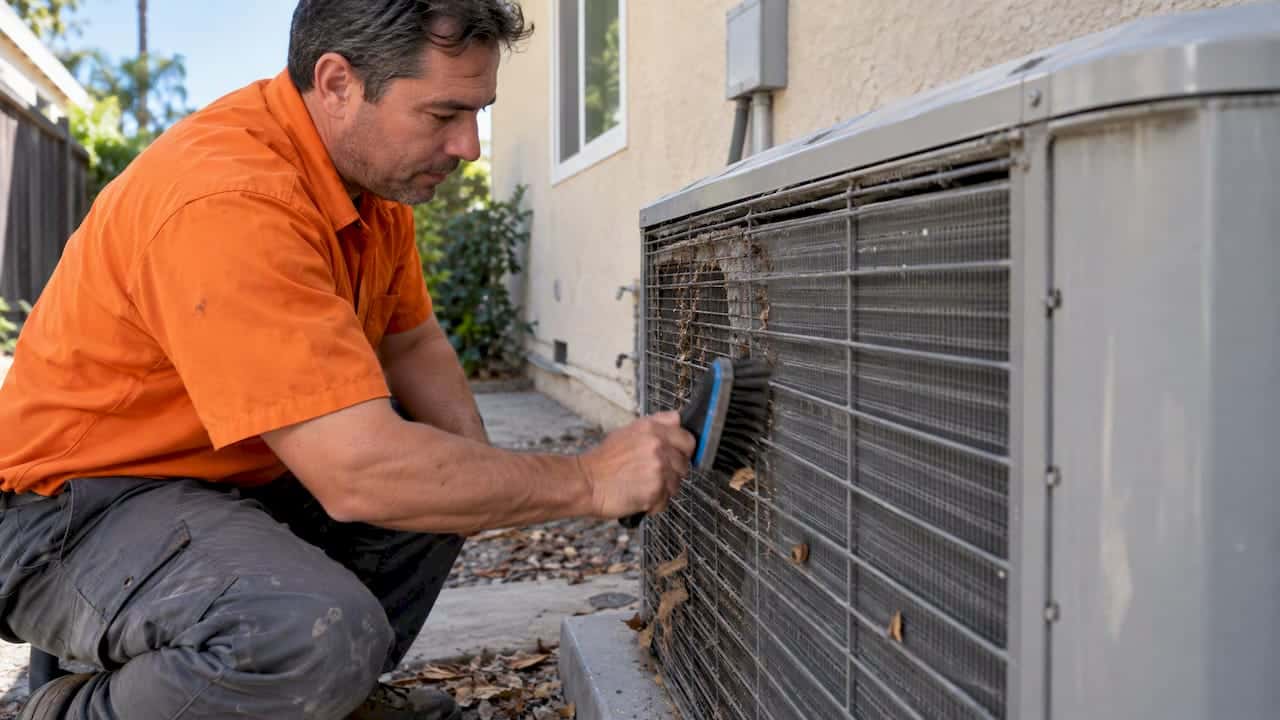
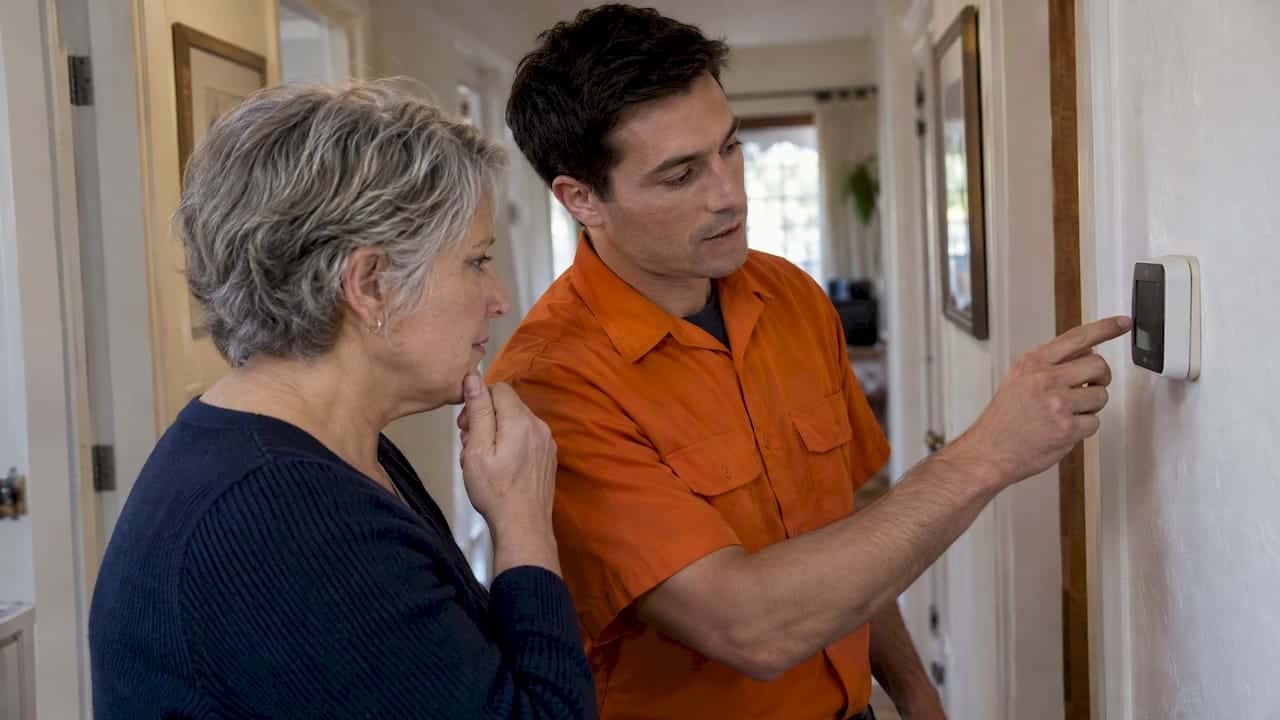
For technical reasons and seasonal scheduling, our duct sealing service is not available at the moment for this season in Beverlywood. For airflow distribution issues, leak remediation, and insulation upgrades, our team continues to provide Duct Repair and Air Balancing.
LC Heating & Air provides professional duct sealing for Beverlywood homes to stop energy waste and fix uneven room temperatures. We use duct blaster testing to quantify leaks and apply either manual mastic sealing or Aeroseal to ensure your conditioned air reaches your living space.
Duct Cleaning & Air Duct Service in Beverlywood
LC Heating & Air provides duct cleaning in Beverlywood — including air duct cleaning, duct repair service, duct sealing, HVAC ductwork. Whether you need same-day service, a written estimate, or help deciding between repair and replacement, our licensed technicians handle every make and model.
We repair and service all major HVAC brands in Beverlywood, including Carrier, Trane, and Goodman, and older or discontinued units. No matter the manufacturer, we diagnose the problem accurately and give you an upfront price before any work begins.
I'm Leo, owner of LC Heating & Air. If your HVAC system seems to run forever without ever quite getting the house comfortable, the problem often isn't the unit itself—it's the ductwork. In many Beverlywood homes, especially those built in the 1940s, duct systems have developed leaks over the decades. When your ducts leak, you're paying to heat or cool your attic, crawl spaces, or wall cavities instead of your living room.
My team and I specialize in identifying these leaks and sealing them properly. Whether we are using manual mastic sealing for accessible areas or the Aeroseal process for hidden leaks, our goal is to make sure the air you pay to condition actually makes it into your home. We are licensed (CSLB #1073586) and provide clear, written estimates so you know exactly what you are paying for before we start.
Call LC Heating & Air at (323) 970-3113 for scheduling and estimates.
Local HVAC considerations
Beverlywood and surrounding neighborhoods
CSLB #1073586
(323) 970-3113
Why Beverlywood Homes Need Duct Sealing
Beverlywood’s housing stock, with its mix of custom hillside homes and older properties, often features complex duct layouts. Because of the hillside terrain and the way these homes were originally built, ductwork is frequently routed through tight-access areas where it is prone to damage, crushing, or simple degradation over time. When air leaks into these unconditioned spaces, it creates a significant energy drain.
We often see 'room-by-room' comfort issues here. Because of the local climate—where sun exposure, slope, and tree cover vary widely—one side of the house might be freezing while the other is sweltering. If your ducts are leaking, your HVAC system cannot compensate for these natural temperature differences. Sealing the leaks ensures that the airflow is balanced, helping the system reach your thermostat setpoint without working overtime.
Understanding Your Duct System
Many homes in this area were constructed in the 1940s. At that time, duct sealing standards were different, and materials like original flex duct or sheet metal connections have likely dried out or loosened. If you have never had your ducts inspected, there is a high probability that you are losing 20–30% of your conditioned air to leakage.
When we inspect a home, we look at the entire path of the air. We check for crushed flex runs, poor insulation, and register balance. In hillside properties, we pay special attention to how the ducts are routed through the structure, as these long runs are often where the most significant leaks occur. Fixing these issues isn't just about efficiency; it's about making your home livable during the peak of the LA heat.
Our Diagnostic Process
We don't guess. We start every duct sealing project with a duct blaster test. This allows us to quantify exactly how much air your system is losing as a percentage of total airflow. This test provides a baseline, so you can see the difference after we finish.
Once we have the data, we decide on the best approach. If the leaks are in accessible plenums or joints, we use manual mastic sealing. Mastic is a thick, flexible sealant that remains pliable for years, unlike standard 'duct tape' which dries out and fails. If the leaks are distributed throughout the system in walls or inaccessible attic runs, we use the Aeroseal process. This involves injecting a polymer mist that finds and seals leaks from the inside out. We finish by running a second duct blaster test to verify the improvement and provide you with the documentation.
Repair or Replace?
A common question I get is whether it's worth sealing old ducts or if they should just be replaced. If the ductwork is structurally sound but just leaky at the joints, sealing is almost always the right move. It’s cost-effective and provides immediate energy savings. However, if the ducts are crushed, collapsed, or made of outdated materials that are falling apart, sealing won't solve the underlying problem.
I’ll be honest with you: if your system is worth repairing, I will tell you. If the pattern of damage points to a need for replacement, I will explain why. We want to provide a solution that fits your property, not just a quick fix that you'll have to redo in a few years.
What to Expect with Costs
Duct sealing is one of the highest-ROI improvements you can make. For manual mastic sealing of accessible sections, you can expect to pay between $400 and $1,200. For the Aeroseal process, which is more involved, the cost typically ranges from $1,500 to $3,000. These prices include the diagnostic testing and the verification testing.
Keep in mind that if you are planning an HVAC replacement, California Title 24 requires duct leakage testing. Doing this correctly the first time avoids the headache of failing a permit inspection later. We provide transparent, written estimates so you know exactly what you are paying for before we start any work.
Access and Logistics in Beverlywood
Working in Beverlywood means dealing with unique access challenges. Whether it's narrow roads or equipment tucked into tight hillside crawl spaces, we plan our logistics carefully. We need to ensure our equipment can get to your system without damaging your home or landscaping.
Most residential duct sealing projects can be completed in a single day. For Aeroseal, we do ask that you vacate the home for about 60 to 90 minutes during the injection process. It’s a simple, non-toxic process, but it’s best to let the system do its work while you’re out. We’ll coordinate the timing with you so it’s as convenient as possible.
Safety and Indoor Air Quality
Your health is the priority. The materials we use, including the Aeroseal polymer, are safe and non-toxic—it's actually the same material used in chewing gum. We also perform a cleaning check before sealing to ensure we aren't sealing in dust or debris.
By sealing your ducts, you also prevent the intake of 'attic air' or 'crawl space air' into your living area. This can significantly improve your indoor air quality by reducing the amount of dust, insulation particles, and allergens that get pulled into your HVAC system and circulated through your home.
Frequently Asked Questions
Q: How much energy can duct sealing save? A: Studies of California homes find average savings of 15–25% of HVAC energy use after professional duct sealing. The actual savings depend on your pre-sealing leakage rate. We quantify your specific leakage before sealing so you can estimate your expected savings.
Q: What is the difference between mastic and duct tape? A: Standard 'duct tape' (the silver cloth tape) is not suitable for HVAC ductwork—it dries out and fails within a few years. Mastic is a thick, flexible sealant that remains pliable and adheres permanently. We use mastic on joints, plenums, and connections.
Q: Does duct sealing require permits in California? A: Standalone duct sealing as a maintenance activity generally doesn't require a permit. When duct sealing is performed as part of an HVAC replacement project, the replacement permit typically requires duct leakage testing and documentation.
Q: How long does duct sealing take? A: Manual sealing of a typical single-family home duct system takes 4–8 hours. The Aeroseal process takes 4–6 hours for the sealing itself plus setup and testing time. We complete most residential duct sealing projects in a single day.
Q: Do I need to leave my home during Aeroseal? A: We recommend vacating the home during the Aeroseal injection process (approximately 60–90 minutes) as a precaution. You can return as soon as the process is complete and the system has run briefly to clear any residual particles.
Mistakes to avoid — Duct Sealing in Beverlywood
Oversized equipment, skipped maintenance, and DIY refrigerant or gas work are frequent duct sealing mistakes we correct in Beverlywood.
Closing too many registers or using the wrong filter MERV rating can starve airflow and shorten component life.
Ready to Improve Your Home's Comfort?
If you're tired of uneven temperatures and high energy bills, let's take a look at your duct system. You can reach LC Heating & Air at (323) 970-3113 to discuss your home's specific needs. We are located at 509 N Fairfax Ave, Los Angeles, CA 90036, and we serve the entire Beverlywood area.
We don't believe in high-pressure sales. We believe in showing you the data, explaining the options, and letting you make an informed decision about your home. Give us a call, and let's see if duct sealing is the right step for your system.
How the visit works
We perform a duct blaster test to quantify existing leakage as a percentage of system airflow.
Based on leakage quantity, duct type, and accessibility, we recommend manual sealing, Aeroseal, or a combination.
We apply mastic to all accessible joints and plenums, or set up and run the Aeroseal process for internal sealing.
We re-run the duct blaster test and provide you with before/after leakage numbers as written documentation.
Cost factors we review before quoting
- • Duct inspection: $125–$200
- • Duct cleaning (whole house): $400–$900
- • Duct sealing: $1,000–$3,000
- • Duct repair or replacement: $500–$5,000
Useful next steps
Duct Sealing in Beverlywood at a glance
- • Duct Sealing provider: LC Heating & Air
- • Location served: Beverlywood, CA 90034
- • License: CSLB C-20 #1073586
- • Phone: (323) 970-3113
- • Estimate: written estimate before approved work
- • Emergency calls answered within 30 minutes (24/7)
Our duct sealing process in Beverlywood
Reviewed by Leo, Owner & Lead Technician
This duct sealing guide for Beverlywood is reviewed for practical HVAC accuracy by Leo at LC Heating & Air. LC Heating & Air holds California CSLB C-20 HVAC license #1073586 and provides written estimates before approved work.
What Beverlywood customers say about duct sealing
Verified reviews from homeowners in Beverlywood and nearby neighborhoods who used our duct sealing service.
“Had LC install a Daikin mini split in our 1940s bungalow that never had AC. The work was clean, the unit is incredibly quiet, and our bedroom finally stays cool in summer. Highly recommend.”
“We converted our garage into an ADU and needed HVAC. LC installed a Mitsubishi single-zone mini split — permits, electrical, everything. The unit is so quiet you can barely hear it running. Our tenant loves it.”
“Got a 3-zone Daikin system for our craftsman home — bedrooms upstairs, living room downstairs. Each room has its own temperature control and the monthly electric bill is actually lower than our old window units combined.”