- Key Takeaways
- Which federal credits covered heat pumps, and what are the key timing rules?
- How much could you save? Credit amounts and annual limits explained
- What equipment actually qualified? Efficiency tiers, ENERGY STAR, and QMID
- Which costs count toward the credit, and how do you calculate it?
- How to claim the credit on your tax return
- Timing your project to get the most out of available credits
- How state and utility rebates can fill the gap for 2026 installs
- How LC Heating and Air Conditioning helps you get the documentation right
- Do replacements qualify the same way as new installations?
- Does your income level affect whether you can claim the credit?
- Who can claim the credit on a leased or rented property?
- Are there any recapture rules that could require repaying the credit?
- What changes in the 2026 tax year affect how you file?
- Why I tell every homeowner to verify before they schedule
- Get your heat pump installation documented correctly from day one
- Sources
- FAQ
- Recommended
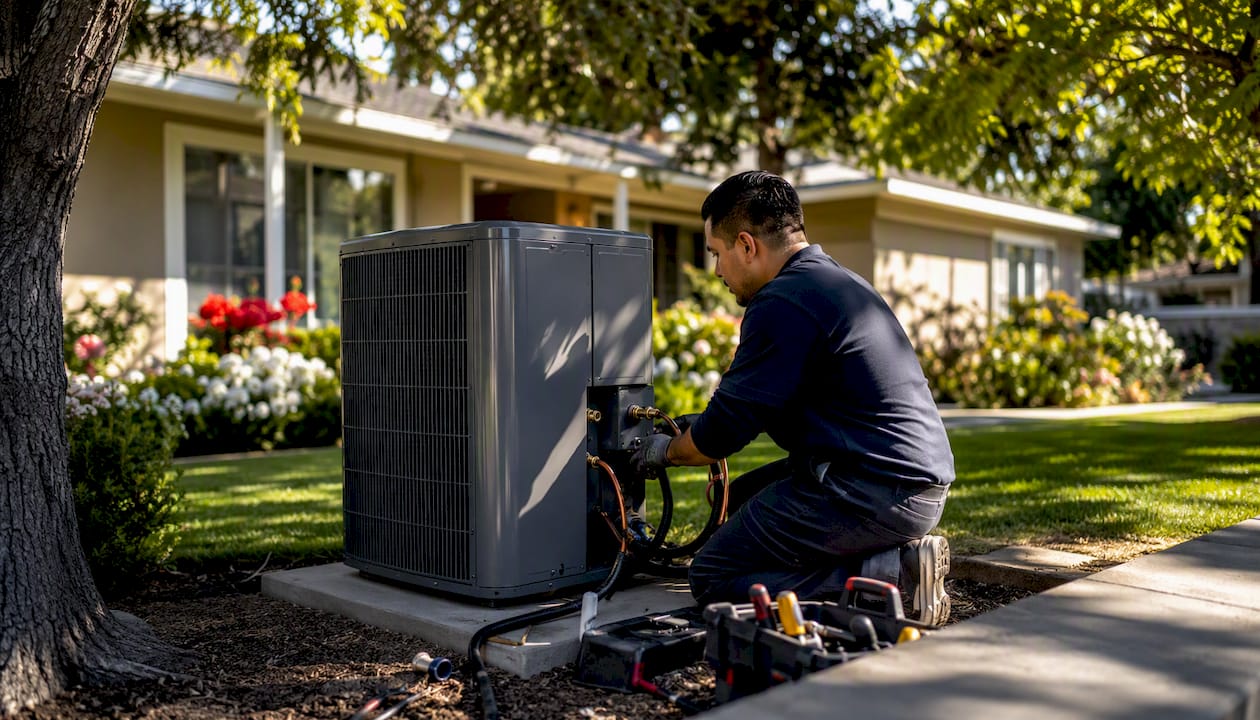
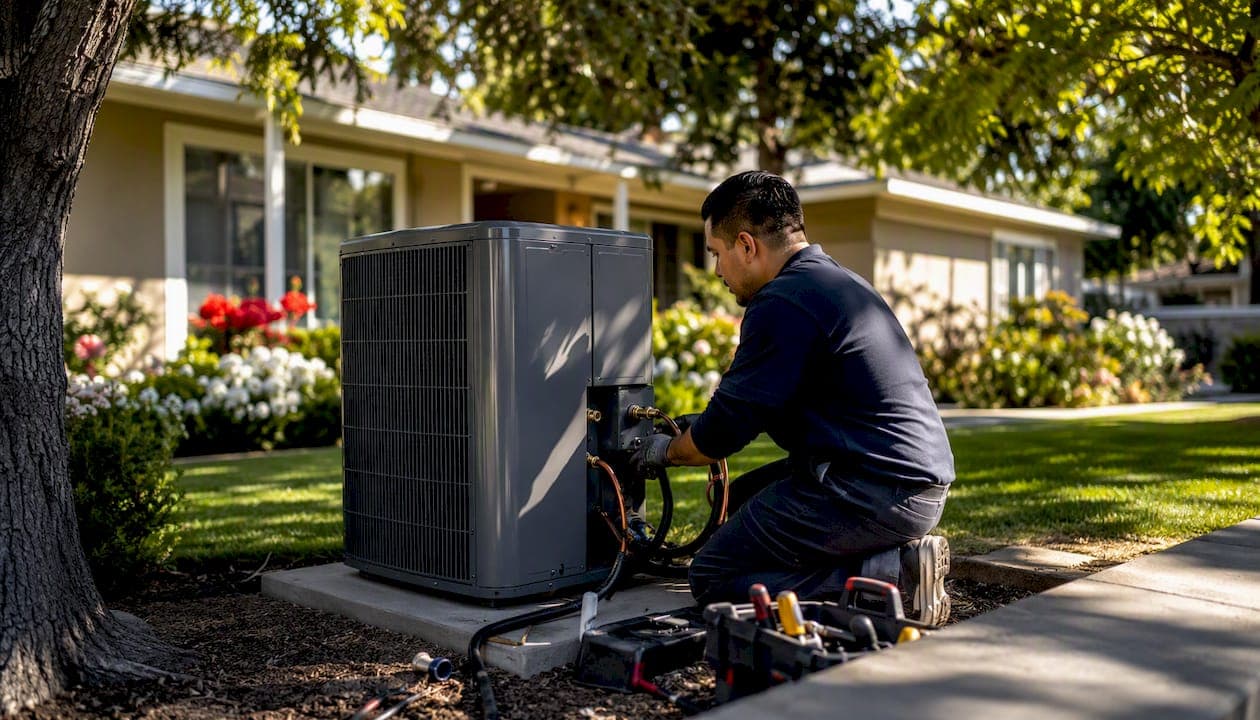
If you’re planning a heat pump installation in 2026, here’s the direct answer: no federal tax credit applies to heat pumps placed in service after December 31, 2025. The One Big Beautiful Bill Act (OBBBA), signed July 4, 2025, accelerated the termination of both Section 25C and Section 25D. A 2026 install does not qualify for either credit, regardless of when you signed the contract or paid the deposit.
Here’s what that means for you right now:
- If your system was installed and operational by December 31, 2025, you can still claim the credit on your 2025 tax return (typically due April 15, 2026). Gather your QMID, itemized invoice, and commissioning date immediately.
- If your system was installed in 2026, federal credits are off the table. Shift your focus to state, utility, and HOMES/HEAR rebate programs instead.
- Verify the “placed in service” date with your installer. A purchase date or deposit receipt does not substitute for an actual installation completion date.
- Save all documentation: model number, Qualified Manufacturer Identification Number (QMID), itemized invoice separating equipment from labor, and proof of payment.
LC Heating and Air Conditioning can verify your installation date and pull together the documentation package your tax preparer needs.
Key Takeaways
Federal heat pump tax credits under Sections 25C and 25D are not available for systems placed in service after December 31, 2025, but homeowners with qualifying 2025 installs can still claim those credits on their 2025 tax return.
| Point | Details |
|---|---|
| 2026 installs don’t qualify | The OBBBA terminated 25C and 25D for property placed in service after Dec. 31, 2025. |
| 2025 installs still earn the credit | File Form 5695 with your 2025 return; the credit is 30% up to $2,000 for heat pumps. |
| QMID is required | Request the Qualified Manufacturer Identification Number from your installer before filing. |
| State and utility rebates remain | HOMES, HEAR, and utility programs are the primary savings path for 2026 heat pump projects. |
| LC Heating and Air Conditioning | Provides itemized invoices, QMID documentation, and rebate guidance for Los Angeles homeowners. |
Which federal credits covered heat pumps, and what are the key timing rules?
Two separate IRS credits historically covered residential heat pumps, and they worked differently.
Section 25C — Energy Efficient Home Improvement Credit covered air-source heat pumps, heat pump water heaters, insulation, windows, and other envelope improvements. It paid 30% of eligible costs with annual caps, including a combined $2,000 annual limit for heat pumps and heat pump water heaters. It applied only to property placed in service on or after January 1, 2023 and on or before December 31, 2025.
Section 25D — Residential Clean Energy Credit covered geothermal heat pumps, solar panels, battery storage, and similar clean-energy property. It paid 30% of qualified clean energy property costs for property installed from 2022 through December 31, 2025. Unlike 25C, 25D carried no annual dollar cap for most qualifying property, and unused credits could carry forward to future tax years.
The critical timing rule for both credits: the “placed in service” date controls eligibility, not the purchase date, contract date, or deposit date. Equipment must have been installed and operational in your home on or before December 31, 2025. The OBBBA eliminated both credits for any property placed in service after that date.
The practical difference between the two credits matters for geothermal owners specifically. If you installed a geothermal heat pump by December 31, 2025, any unused 25D credit from that year can carry forward to your 2026 return. Air-source heat pump owners under 25C had no carryforward option.
How much could you save? Credit amounts and annual limits explained
The caps reset every calendar year, influencing how homeowners could plan multiple projects.
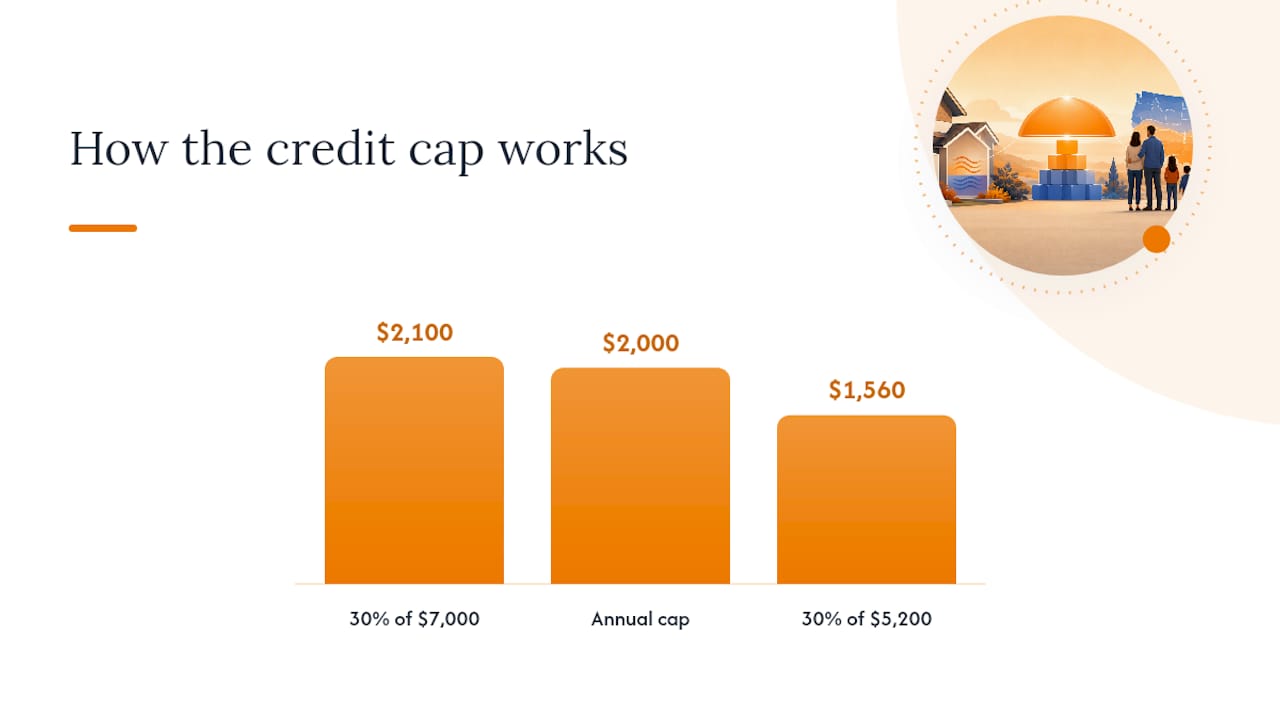
The total maximum credit across all 25C categories in a single tax year had separate limits for heat pumps and envelope improvements.
Worked example — system that hits the cap:
- Air-source heat pump equipment cost: $5,500
- Installation labor: $1,500
- Total qualifying cost: $7,000
- 30% of $7,000 = $2,100
- Apply the $2,000 annual cap → credit = $2,000
Worked example — system under the cap:
- Heat pump equipment: $4,000
- Installation labor: $1,200
- Total qualifying cost: $5,200
- 30% of $5,200 = $1,560
- $1,560 is below the $2,000 cap → credit = $1,560
The cap is a ceiling, not a floor.
What equipment actually qualified? Efficiency tiers, ENERGY STAR, and QMID
Not every heat pump on the market qualified. The IRS required equipment to meet specific efficiency standards, and ENERGY STAR documents the eligible air-source heat pump pathways, including ENERGY STAR Most Efficient designations. Eligible equipment must meet the Consortium for Energy Efficiency (CEE) highest efficiency tier in effect at the start of the calendar year the property is placed in service.
Two main pathways existed for air-source heat pumps:
- ENERGY STAR Most Efficient designation, which typically requires higher SEER2 and HSPF2 ratings than standard ENERGY STAR certification
- CEE highest efficiency tier as defined at the start of that calendar year, which sets the minimum performance bar for the credit
For geothermal heat pumps under 25D, ENERGY STAR certification was the primary qualifying standard.
The QMID requirement is where many homeowners stumble. Starting with 2025 installations, manufacturers were required to register qualifying products and issue a Qualified Manufacturer Identification Number. Your installer must provide this number, and you report it on Form 5695, lines 29a through 29d. Without a valid QMID, the IRS cannot verify that your specific unit met the efficiency standard, and your credit claim is at risk.
Before any installation, ask your contractor: “What is the QMID for this unit, and can you put it on the invoice?” A contractor who cannot answer that question may not be familiar with the documentation requirements.
Pro Tip: Check the ENERGY STAR product list at energystar.gov before your installation is scheduled. If the model your contractor proposes isn’t on the list, ask for an alternative that is, or request written confirmation of its CEE tier status.
Who may claim the credit:
- The homeowner who owns and occupies the residence as a principal home
- Joint occupants may each claim credits for their share of qualifying costs
- Renters and landlords (for rental properties) generally cannot claim 25C; the credit is for the homeowner-occupant of their primary or secondary residence
Which costs count toward the credit, and how do you calculate it?
The credit basis under 25C included more than just the equipment purchase price.
Qualifying cost categories:
- Heat pump unit (equipment cost)
- Installation labor paid to a licensed contractor
- Electrical panel upgrades or wiring work required specifically to support the new heat pump (enabling upgrades)
- Refrigerant line sets and associated materials directly tied to the installation
Costs that do not qualify include extended warranties, service contracts, or any work unrelated to the qualifying equipment itself.
Step-by-step calculation, Example A (under the cap):
- Heat pump unit: $3,800
- Installation labor: $900
- Electrical enabling upgrade (panel breaker): $300
- Total qualifying basis: $5,000
- 30% × $5,000 = $1,500 credit (below the $2,000 cap, so the full amount applies)
Step-by-step calculation, Example B (hits the cap):
- Heat pump unit: $6,200
- Installation labor: $1,800
- Electrical enabling upgrade: $500
- Total qualifying basis: $8,500
- 30% × $8,500 = $2,550
- Apply the $2,000 annual cap → credit = $2,000
In Example B, $550 of potential credit is lost because the cap applies. That’s exactly why spreading projects across two tax years (when both years were eligible) was a smart strategy for homeowners with multiple planned upgrades.
How to claim the credit on your tax return
Use Form 5695 to calculate and claim residential energy credits. For 25C (air-source heat pumps), use Part II of the form. For 25D (geothermal), use Part I.
Where to enter the QMID: Lines 29a through 29d of the 2025 Form 5695 instructions collect the QMID and cost details for heat pumps and heat pump water heaters. If you installed multiple qualifying units, you may need to attach a statement listing each unit’s QMID and associated costs.
Recordkeeping checklist (keep for at least three years after filing):
- Itemized contractor invoice showing equipment cost and labor separately
- Model number and QMID for each qualifying unit
- Proof of payment (bank statement, credit card record, or canceled check)
- Commissioning or placed-in-service date (the date the system was operational)
- Permit and inspection records where applicable
- ENERGY STAR product listing printout or CEE tier documentation for the model
Carryforward note for 25D: Unused Residential Clean Energy Credits from a geothermal heat pump installed by December 31, 2025 can carry forward to future tax years. Air-source heat pump credits under 25C do not carry forward — any unused 25C credit from 2025 is simply lost.
The placed-in-service date on your invoice is the single document the IRS cares about most. If that date reads January 2026 or later, neither credit applies.
Timing your project to get the most out of available credits
The “placed in service” date is the legal trigger for both 25C and 25D. It is the date your system was installed, commissioned, and operational in your home, not the date you signed a contract, paid a deposit, or received delivery of equipment.
This distinction matters because many homeowners assumed a 2024 or early 2025 purchase would preserve their credit even if installation slipped into 2026. It does not. There is no grandfathering provision after December 31, 2025.
For homeowners who completed their installation by that deadline, the credit is claimed on the 2025 tax return, typically due April 15, 2026.
Multi-year planning (for reference on past-eligible years):
The annual cap reset each January 1, which meant a homeowner who installed a heat pump in 2024 and added insulation plus new windows in 2025 could claim up to $2,000 in year one and up to $1,200 in year two, for a combined $3,200 across two returns.
Planning dos and don’ts:
- Do confirm the placed-in-service date in writing before scheduling any installation
- Do request the QMID from your contractor before the job starts, not after
- Do separate equipment and labor costs on your invoice from day one
- Don’t assume a signed contract or deposit receipt counts as a placed-in-service date
- Don’t schedule an installation in late December without confirming the contractor can complete and commission the system before year-end
- Don’t rely on a verbal assurance from a salesperson that a system “qualifies for the 30% credit” without verifying the model on the ENERGY STAR list yourself
How state and utility rebates can fill the gap for 2026 installs
Federal credits are gone for 2026 installs, but state, utility, and federally funded rebate programs remain active. HOMES and HEAR rebate programs, funded through the Inflation Reduction Act and administered at the state level, are a primary savings pathway for homeowners installing heat pumps this year.
Key stacking principle: State and utility rebates are generally independent of the federal tax credit. Even when the federal credit was available, most programs allowed stacking, though some required you to subtract the federal credit amount from the rebate basis. Always read the specific program rules before assuming full stacking applies.
Where to check for 2026 incentives:
- Your state energy office (search “[your state] energy office heat pump rebate 2026”)
- Your utility company’s rebate portal (many offer $200–$1,000 for qualifying heat pump installs)
- ENERGY STAR’s rebate finder at energystar.gov
- California-specific programs through the California Public Utilities Commission and local utilities like SoCalGas and SCE
Stacking example (when a federal credit applied):
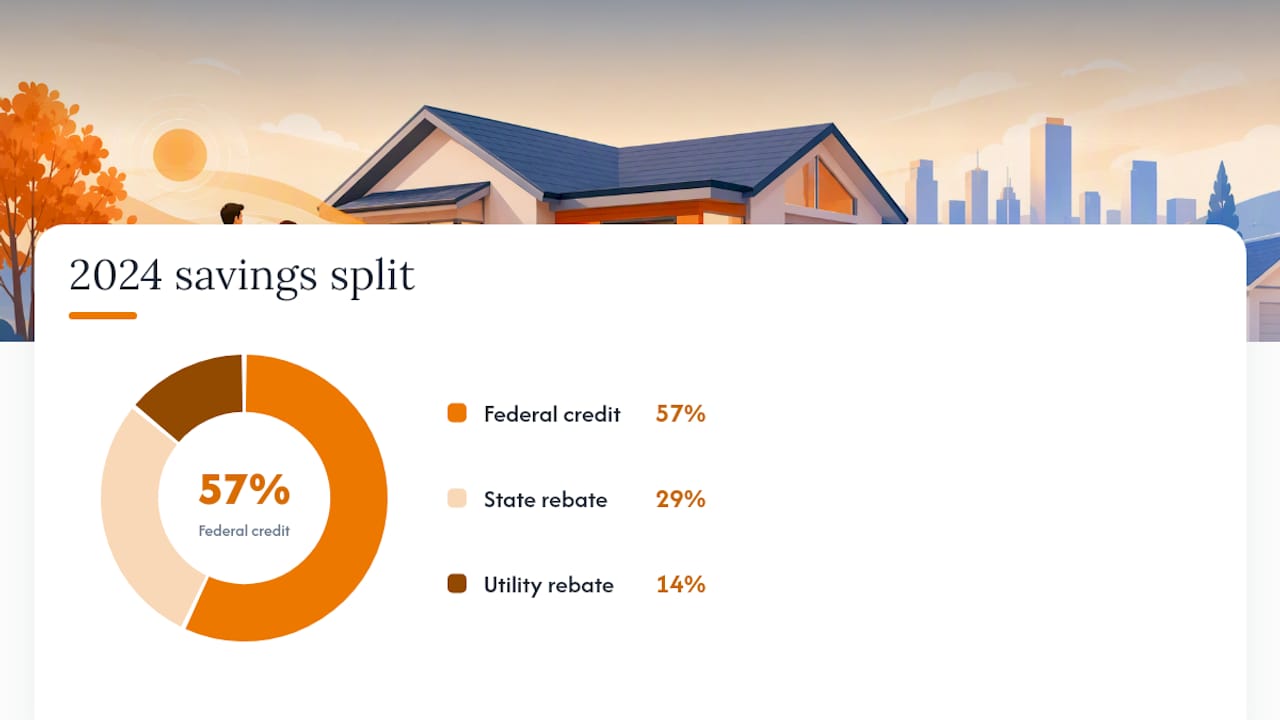
A Los Angeles homeowner installing a qualifying air-source heat pump in 2024 with a $7,000 total project cost could have combined a $2,000 federal 25C credit with a $500 SCE utility rebate and a $1,000 California state rebate, for a combined $3,500 in savings on a $7,000 project. For 2026 installs, the federal piece is gone, but the state and utility layers remain.
For California-specific rebates and eligibility checks, LC Heating and Air Conditioning tracks current program availability and can tell you which programs are open and funded before you schedule your install.
How LC Heating and Air Conditioning helps you get the documentation right
The equipment choice matters, but a qualifying unit with missing or incorrect documentation is just as costly as a non-qualifying one.
LC Heating and Air Conditioning provides every homeowner with a documentation package designed for tax preparers:
- Model number and QMID listed explicitly on the installation invoice
- Itemized invoice separating equipment cost from labor, enabling upgrades, and materials
- Commissioning date confirmed in writing on the day the system is operational
- ENERGY STAR and CEE tier verification completed before the unit is ordered, not after installation
- Permit and inspection references included where the local jurisdiction requires them
Pro Tip: When getting quotes from any HVAC contractor, ask specifically: “Will you provide the QMID on the invoice and confirm the placed-in-service date in writing?” If a contractor hesitates or doesn’t know what a QMID is, that’s a signal worth taking seriously.
For homeowners who completed a qualifying installation by December 31, 2025, LC Heating and Air Conditioning can review your existing paperwork and identify any gaps before you file. For 2026 projects, the team helps you identify which state and utility rebate programs are currently funded and what documentation those programs require, so you’re not starting from scratch when you apply.
Do replacements qualify the same way as new installations?
Yes. The 25C credit applied to both new heat pump installations and replacements of existing systems, as long as the replacement met the CEE highest efficiency tier and ENERGY STAR requirements. There was no requirement that the home previously lacked a heat pump. A homeowner replacing an aging gas furnace with a qualifying air-source heat pump, or swapping an old heat pump for a newer, more efficient model, could claim the credit on the same terms as a first-time installation.
The only condition that mattered was whether the replacement unit met the efficiency standard and was placed in service by December 31, 2025. The age or type of the system being replaced was irrelevant to eligibility.
Does your income level affect whether you can claim the credit?
Section 25C and 25D credits were nonrefundable, which is the most important income-related constraint. A nonrefundable credit can reduce your federal tax liability to zero, but it cannot generate a refund beyond what you already paid in. If your total federal tax bill for 2025 was $1,200, a $2,000 25C credit would reduce your liability to zero but the remaining $800 would not be refunded.
There was no income cap or phase-out for either 25C or 25D. A homeowner earning $40,000 and a homeowner earning $400,000 faced the same credit rules. The practical limitation was simply whether you had enough federal tax liability to absorb the credit.
For lower-income households, the HOMES and HEAR rebate programs are often more valuable than a nonrefundable credit, because rebates reduce the upfront cost directly rather than offsetting a tax bill you may not owe.
Who can claim the credit on a leased or rented property?
The 25C credit was available only to the homeowner who owned and occupied the residence as a principal or secondary home. Renters cannot claim it, even if they paid for the heat pump installation themselves. Landlords cannot claim it for rental properties, because the credit applies to owner-occupied residences, not income-producing property.
For a property with joint ownership, each co-owner could claim a credit proportional to their share of the qualifying costs, subject to the same annual caps. A married couple filing jointly would claim the credit once on their joint return, not twice.
If you rent your home and your landlord installs a heat pump, the credit belongs to the landlord only if the property is their primary or secondary residence, which is rarely the case for rental units. In practice, most rental property heat pump installs do not qualify for 25C.
Are there any recapture rules that could require repaying the credit?
Section 25C had no formal recapture provision. Once you claimed the credit on a qualifying installation, you were not required to repay it if you later sold the home, changed its use, or removed the equipment. The credit was a one-time benefit tied to the tax year the property was placed in service.
Section 25D (geothermal, solar) also had no recapture rule for residential installations. The IRS does not claw back residential clean energy credits when a home is sold.
This is meaningfully different from some business energy credits, which do carry recapture rules if the property is disposed of within a certain period. For residential homeowners, the absence of recapture means the credit is yours to keep once properly claimed.
What changes in the 2026 tax year affect how you file?
For homeowners who installed qualifying equipment by December 31, 2025, the filing process for the 2025 tax return (due April 15, 2026) is unchanged. You file Form 5695, report the QMID and costs on the relevant lines, and attach any required statements. The IRS page for Form 5695 was last reviewed March 30, 2026, confirming current guidance.
For 2026 installs, there is no federal credit to claim, so Form 5695 is not relevant for new heat pump projects completed this year. The application process for state and utility rebates varies by program and does not involve IRS forms.
One practical change worth noting: because the OBBBA terminated the credits effective January 1, 2026, some tax software may still prompt users about energy credits during the 2025 filing season. Answer based on your actual placed-in-service date. If your system was commissioned in 2025, the credit applies. If it was commissioned in 2026, it does not, regardless of what the software suggests.
Why I tell every homeowner to verify before they schedule
The most expensive mistake I see in this business isn’t a failed compressor or an undersized system.
By the time the homeowner files their taxes and the credit is denied, the contractor is long gone.
My advice is simple: before you schedule any heat pump installation, pull up the ENERGY STAR product list yourself, confirm the model is on it, and ask your contractor to put the QMID on the quote in writing. For 2026 projects, skip the federal credit conversation entirely and go straight to your state energy office and utility rebate portal. Those programs are real, funded, and available right now. A tax credit that no longer exists is not a savings plan.
For edge cases, especially geothermal installs with potential 25D carryforward credits, consult a tax professional who knows residential energy credits. The IRS instructions are clear, but the interaction between carryforward amounts and your current-year liability can get complicated fast.
Get your heat pump installation documented correctly from day one
When you’re ready to move forward with a heat pump install in the Greater Los Angeles area, the difference between a smooth rebate application and a denied claim often comes down to what’s on your invoice.
LC Heating and Air Conditioning provides every customer with an itemized invoice that separates equipment cost from labor, lists the model number and QMID explicitly, and confirms the commissioning date in writing. For 2026 projects, the team identifies which state and utility rebate programs are currently open, what efficiency tiers they require, and what documentation you’ll need to submit.
Whether you’re replacing an aging system or installing a multi-zone mini split for the first time, LC Heating and Air Conditioning handles the technical verification so your paperwork is ready before you apply for any incentive. With over 20 years serving Los Angeles homeowners, the team knows which programs are funded, which models qualify, and how to structure an install that holds up to scrutiny. Book an eligibility check or installation quote today and get a clear picture of your actual savings before you commit.
Sources
Check these official pages directly when verifying eligibility, model lists, or filing instructions. Note the “page last reviewed” date on each government page to confirm you’re reading current guidance.
- Energy Efficient Home Improvement Credit | Internal Revenue Service
- Federal Tax Credits for Energy Efficiency — Air Source Heat Pumps | ENERGY STAR
- HVAC Tax Credits 2026: Complete Guide to Federal Credits, IRA Rebates & State Incentives | HVAC Base
This article is general information, not a substitute for advice from a qualified financial advisor. Consult a qualified financial professional about your own circumstances before acting on anything here.
FAQ
Can you still get a federal tax credit for a heat pump in 2026?
Only if your system was placed in service on or before December 31, 2025. Heat pumps installed in 2026 do not qualify for the Section 25C or 25D credits, which were terminated by the OBBBA signed July 4, 2025.
How much is the heat pump tax credit for a 2025 installation?
A $7,000 project yields a $2,100 calculation, but the credit is capped at $2,000.
Who qualifies for the $6,000 tax break mentioned in recent news?
The 25C credit was capped at $2,000 annually for heat pumps. Consult a tax professional for guidance on any new legislation affecting your specific situation.
Does replacing an old heat pump qualify the same as a new installation?
Yes. The 25C credit applied to qualifying replacements and new installations equally, provided the replacement unit met CEE highest efficiency tier standards and was placed in service by December 31, 2025.
What should you do if you installed a heat pump in 2026 and want to save money?
Check your state energy office and utility rebate portal for HOMES, HEAR, and utility-funded programs. These rebates are independent of the expired federal credits and remain available for qualifying 2026 heat pump installations.
Recommended
Leo, Owner & Lead Technician at LC Heating & Air
Leo leads LC Heating & Air as an owner-operator and holds California CSLB C-20 HVAC license #1073586. His guides focus on practical diagnostics, safe repair decisions, and clear advice for Los Angeles homeowners.