TL;DR Summary for Those in a Hurry:
- HVAC vs Plumbing explains who is responsible for your water heater — HVAC technicians typically handle heating systems including some water heaters, while plumbers focus on water supply, drains, and fixtures.
- Knowing which professional to call helps you get faster, more accurate service when your water heater needs repair or replacement.
- HVAC techs are often best for systems tied to home heating or combined HVAC – water heater units, while plumbers handle tankless, gas line, and piping issues.
- Choosing the right service ensures safety, code compliance, and proper diagnosis of your water heater problem.
You see a puddle of water on your utility room floor. Is it a leaky pipe, or is the air conditioner dripping? It’s a frustratingly common question, and according to home service industry data, calling the wrong professional can easily cost you a hundred-dollar service fee just to be told you need someone else.
This confusion between HVAC and plumbing is completely understandable. A plumber works with water pipes, but an HVAC technician works on appliances that might also use pipes for gas or drainage. While their jobs seem distinct – one handles water systems, the other handles air – their work can overlap in surprising ways, creating a headache for homeowners.
This guide provides the clear-cut rules on who to call for everything from a dripping AC to a furnace that won’t start, helping you diagnose the issue and make the right call every time.
Summary
This guide clarifies when to call a plumber versus an HVAC technician by focusing on the system’s purpose: moving water (plumber) or moving air (HVAC). Water heaters fall under plumbing, while boilers and radiant floor heating are HVAC. Gas line issues go to the pro responsible for the connected appliance, and AC leaks are an HVAC matter due to the condensate drain. Use the quick-reference list to avoid miscalls and unnecessary service fees.
The Core Difference: Is It Moving Water or Air?
When you’re staring at a mysterious puddle or feeling no cool air from your vents, knowing the fundamental difference between a plumber and an HVAC tech is the key to a quick fix. While both trades work on complex systems inside your walls, they are responsible for two entirely separate domains. The simplest way to tell them apart is to ask one question: is the system designed to move water , or is it designed to move air? If the answer is water, you need a plumber. If it’s air, you need an HVAC technician.
A great way to remember this is to think of your home like a body. Plumbing is the circulatory system, managing all the water. It brings in fresh water through supply lines (like arteries) and removes wastewater through drain lines (like veins). In contrast, HVAC is the respiratory system. It’s responsible for your home’s “breathing” – pulling air in, heating or cooling it, and then circulating it through ducts to keep you comfortable.
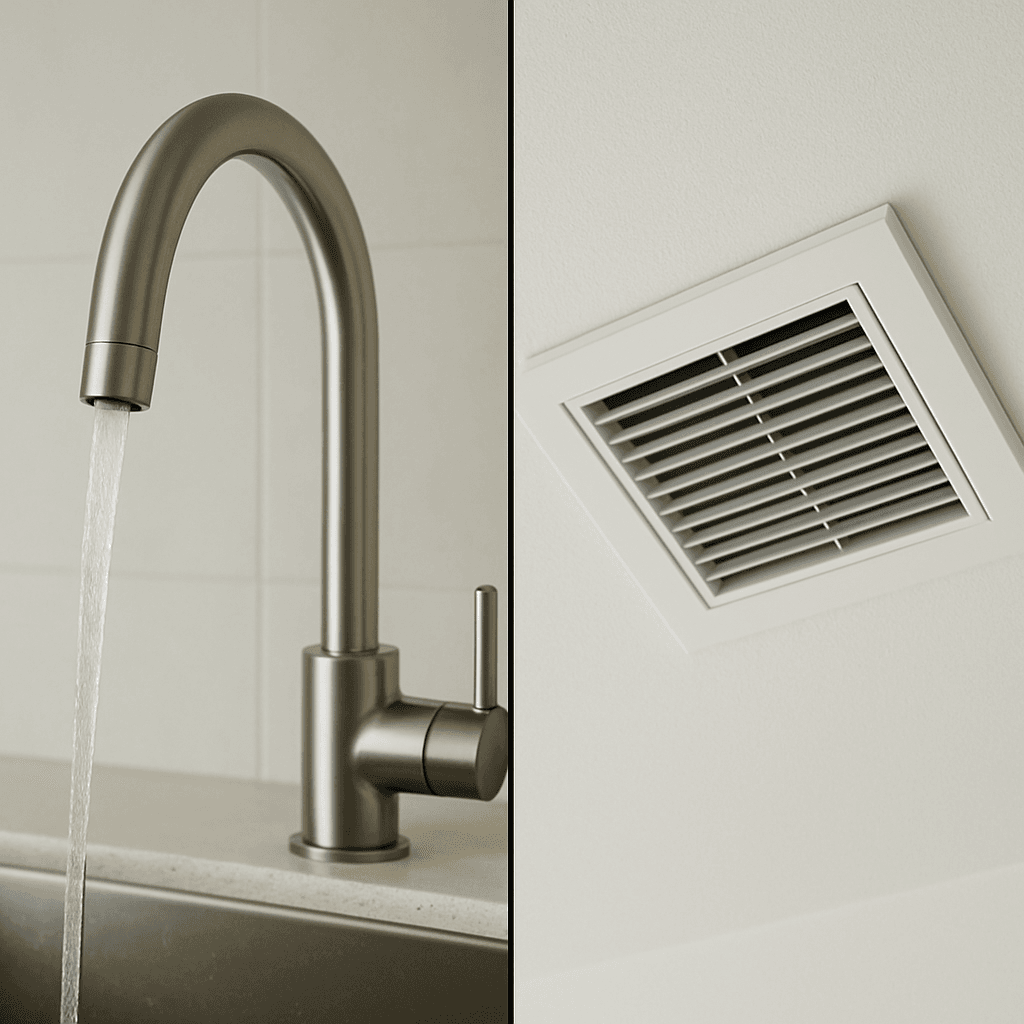
As the image below shows, a plumber deals with the faucet that delivers water, while an HVAC technician handles the vent that delivers conditioned air. These two systems work independently to keep your home running smoothly.
A Plumber’s World: Sinks, Toilets, and Water Lines
A plumber’s work is all about two different kinds of pipes: supply lines that bring fresh, clean water into your fixtures, and drain lines that carry used water and waste away safely. Think of it as a one-way system designed to keep your family healthy.
This distinction between ‘clean in’ and ‘waste out’ is critical. Plumbers are licensed professionals whose most important job is to protect your home’s potable water – the water you drink and cook with – from ever mixing with wastewater. Diagnosing plumbing problems correctly isn’t just about stopping a leak; it’s about maintaining a safe, sanitary home environment.
Call a Plumber For:
- Dripping faucets or running toilets
- Clogged sinks, tubs, or toilets
- No hot water or problems with your water heater
- Low water pressure throughout the house
- Sump pump failures (the pump that keeps your basement dry)
- Installing new sinks, tubs, or other fixtures
An HVAC Tech’s World: Furnaces, AC, and Air Quality
While a plumber handles the water moving through your pipes, a certified HVAC technician manages the air you breathe inside your home. Their world revolves around your Heating, Ventilation, and Air Conditioning (HVAC) system – the equipment that controls your indoor climate. Think of it as your home’s respiratory system: it pulls air in, heats or cools it using a furnace or air conditioner , and circulates it through a network of ductwork.
The entire system is directed by your thermostat, which acts as the command center for your home’s climate.
Call an HVAC Tech For:
- Your air conditioner is running but not blowing cold air.
- The furnace won’t turn on or is blowing cool air in winter.
- Your thermostat is blank, inaccurate, or unresponsive.
- Strange noises like banging or squealing from your furnace or AC unit.
- Improving your home’s air filtration or purification.
The Big Question: Who Fixes a Water Heater?
Here is the single most common point of confusion between the two trades. Your water heater has “heater” in its name, a term you associate with an HVAC furnace. Yet, it’s a big tank full of water, which feels like a plumber’s domain. So when it stops making hot water or starts leaking, who do you call?
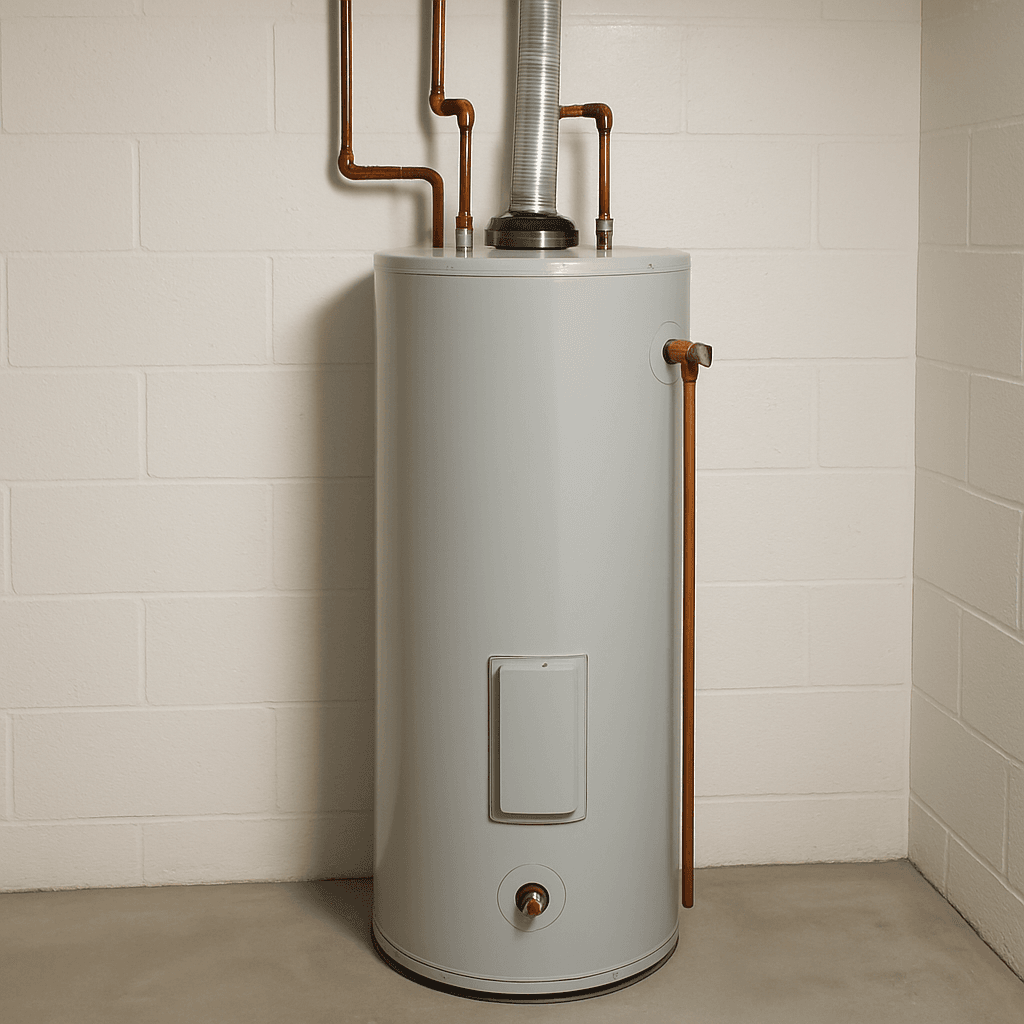
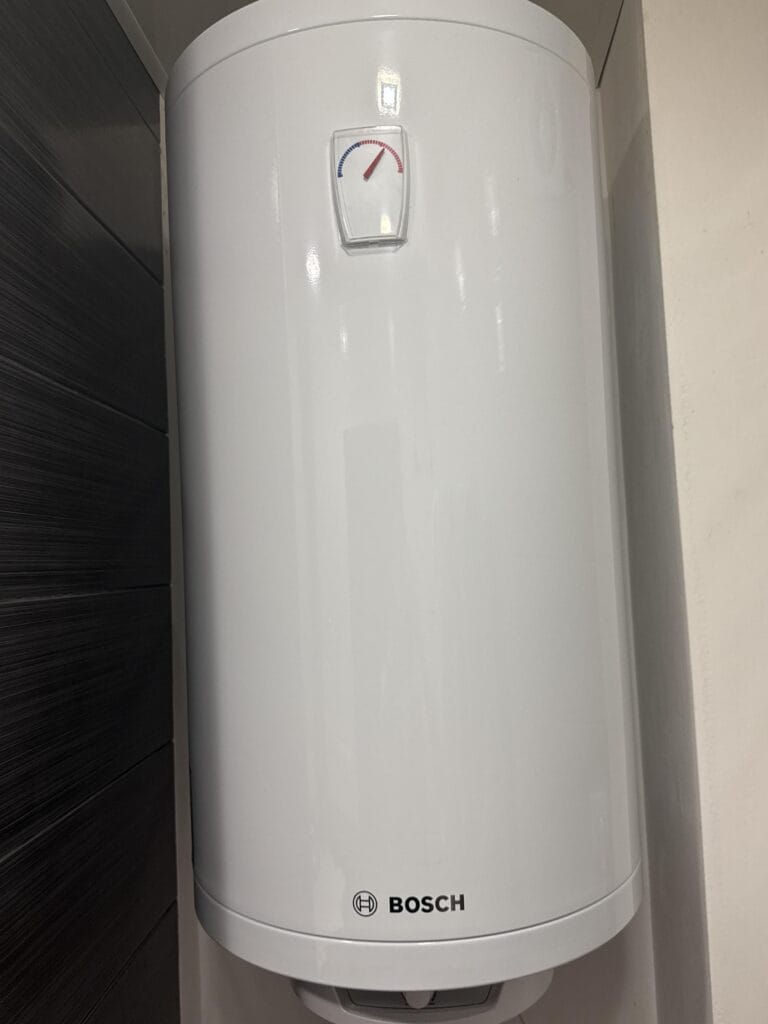
Despite the name, a broken water heater is a job for a plumber. The key is to think about the appliance’s purpose. A water heater’s only job is to heat and supply water for your faucets, showers, and dishwasher. Because it is a core part of your home’s water distribution system – the same system a plumber is licensed to install and repair – it falls squarely under their responsibility.
A simple rule of thumb cuts through the confusion: If the appliance heats water for you to use, call a plumber. If it heats air to keep you comfortable, call an HVAC technician. This clear distinction helps, but what about other gray areas, like the gas line connected to your furnace or a water leak coming from your AC unit?
Gray Areas: Who Handles Gas Lines and AC Leaks?
The question of who handles gas lines can be confusing because both trades are licensed to work with them. The answer, however, is surprisingly simple: it depends on which appliance the gas line serves. If you suspect a problem with the line connected to your furnace, that’s a job for an HVAC technician. But if the issue is with the line running to your gas water heater or stove, you should call a plumber. The professional responsible for the appliance is also responsible for its direct fuel connection.
Finding a puddle under your indoor air conditioning unit is another common head-scratcher. Your AC doesn’t use plumbing pipes, so why is it leaking water? As your system cools the air, it pulls out moisture, just like a cold glass “sweats” on a humid day. This water is supposed to flow outside through a dedicated pipe called a condensate drain. If that drain gets clogged, water backs up. Since this water is a byproduct of the air conditioning process itself, an HVAC technician is the expert to call for this type of leak.
In both tricky situations, the core rule holds true: jurisdiction is tied to the system’s main job. An HVAC tech manages the byproducts of conditioning air, and the pro who owns the appliance also owns its fuel line.
What About Boilers and Radiant Floor Heating?
A boiler might seem like a job for a plumber, but it’s actually specialized HVAC equipment. The key distinction is that a water heater makes hot water for your sinks and showers (a plumbing task), whereas a boiler heats water to circulate through pipes for the sole purpose of heating your home. Because its fundamental job is controlling your home’s climate, a boiler falls firmly in the HVAC category.
That hot water is often used in a radiant floor heating system, where a network of tubes under your floorboards carries the heated water from the boiler, turning your floor into a giant radiator. It’s a closed system – the water used for heating never mixes with the water you drink or bathe in. Since the boiler and the radiant floor are two parts of the same home-heating system, they are both serviced by an HVAC professional, often one who specializes in these “hydronic” systems.
This reinforces the most reliable rule of thumb: always ask what the system’s ultimate purpose is. Does it heat the space you live in? That’s an HVAC job. Does it deliver usable water to a fixture or carry waste away? That’s a call for a plumber.
A Quick Look at the Trades: Skills, Salary, and Career Paths
Beyond the different systems they fix, plumbers and HVAC technicians bring unique skills to your home. A plumber is a master of water pressure and drainage, ensuring liquids are properly contained and directed according to strict health codes. An HVAC technician’s work, on the other hand, is often more focused on electrical systems, the science of refrigeration, and managing airflow to control a home’s climate.
Both fields offer stable, in-demand career paths. Because every building needs functional water and climate control, skilled tradespeople are always needed, regardless of the economy. This translates into strong job security and excellent earning potential, making either trade a rewarding profession.
Reaching that professional level requires years of dedicated training through apprenticeships and trade schools. This deep specialization is why calling the right person matters for a safe and effective repair.
Understanding HVAC vs plumbing roles helps you contact the right expert for water heater issues, saving time and ensuring correct, safe repairs or installations.
FAQ:
Is a water heater part of HVAC or plumbing?
A water heater is generally considered part of the plumbing system, since plumbers specialize in water supply, piping, and appliances that deal with water delivery and drainage.
Should I call a plumber or HVAC technician for water heater issues?
For most water heater repairs or installations — including leaks, tank problems, and pressure issues — a licensed plumber is usually the right professional to contact.
Can an HVAC technician handle a water heater?
While some HVAC techs may diagnose basic water heater problems, plumbers are typically better trained and equipped for comprehensive water heater repair and installation.
What’s the difference between HVAC and plumbing trades?
HVAC technicians work on heating, ventilation, and air conditioning systems to control indoor climate, while plumbers focus on water, drain, and gas systems including water heaters.
When might I need an HVAC tech for a water heater?
If your water heater is integrated with your home’s furnace or uses heat pump technology, an HVAC technician may be involved, but plumbers still handle most water-side components.
Do plumbers handle both electric and gas water heaters?
Yes — plumbers commonly repair and install both electric and gas water heaters, including addressing piping, valves, and pressure issues that affect safe operation.