TL;DR Summary for Those in a Hurry:
- House Thermostat Wiring Basics explains how the wires connecting your thermostat to your HVAC system work so you can understand and troubleshoot temperature control.
- Learn the common wire colors and their functions (like power, heat, cooling, fan, and common wires) to ensure proper thermostat communication.
- Proper wiring ensures your heating and cooling system responds correctly to thermostat commands, improving comfort and efficiency.
- Knowing the basics also helps you safely install or upgrade to a smart thermostat with confidence.
- When in doubt, consult a professional to avoid wiring mistakes that could affect system performance.
In today’s world, home technology continues to evolve, offering greater comfort and efficiency. One such advancement is the thermostat, a small but vital device that controls your home’s heating and cooling system. However, understanding house thermostat wiring basics can feel intimidating for many homeowners.
As the proud owner of LC Heating and Air Conditioning in Hollywood, I’m here to break down thermostat wiring into simple terms so you can troubleshoot issues confidently or better understand what goes on behind the scenes when installing or upgrading your system.
The Importance of Thermostat Wiring Knowledge
A properly wired thermostat ensures your HVAC system operates efficiently. Incorrect wiring can cause malfunctions, energy waste, or even damage equipment. By understanding basic wire functions and color codes, you’ll gain confidence in managing simple troubleshooting tasks at home.
Basic Thermostat Wire Color Codes Explained
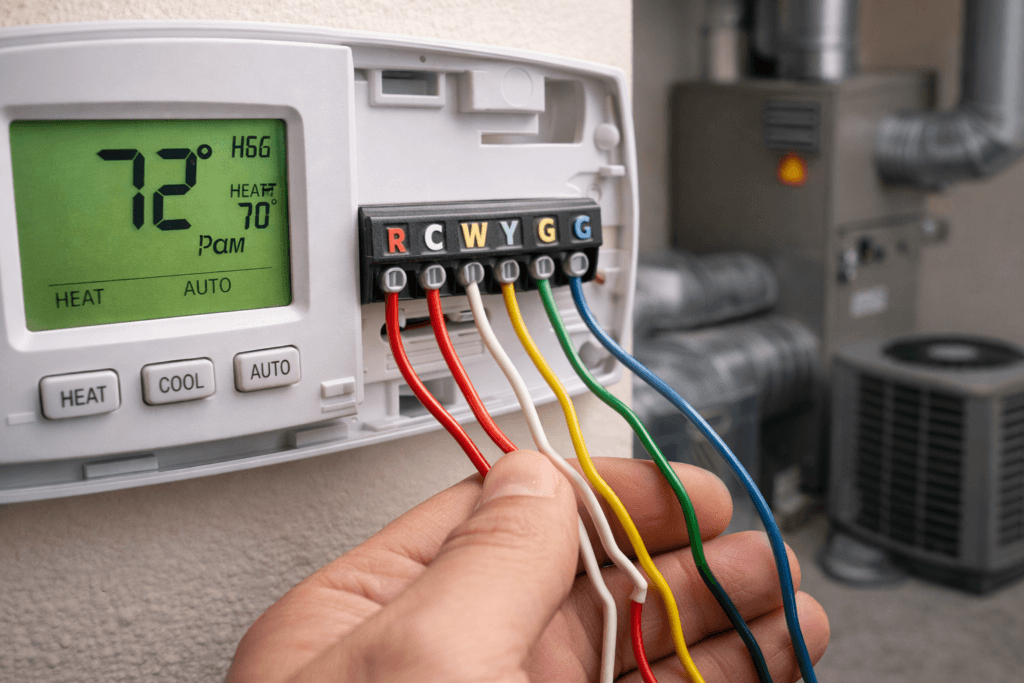
Most thermostats use low-voltage wires that are color-coded. Each wire serves a specific purpose:
- Red Wire (R): Power from the HVAC transformer; supplies energy to operate the thermostat.
- White Wire (W): Controls heating functions; essential for warmth during colder months.
- Yellow Wire (Y): Engages cooling systems; keeps your home comfortable during hot seasons.
- Green Wire (G): Operates the fan motor; helps distribute air efficiently through your vents.
- Blue/Black Wire (C – Common): Provides continuous power supply to smart/digital thermostats.
This color-coded “map” makes identifying connections straightforward during installation or troubleshooting.
Troubleshooting Thermostat Wiring Issues
No Power to Thermostat?
If your display is blank or unresponsive: check if the circuit breaker has tripped or if wires have come loose. Loose connections are one of the most common causes of malfunctioning thermostats.
No Heating or Cooling Response?
If adjusting settings doesn’t trigger heating/cooling: double-check wire connections against a proper wiring diagram. An incorrectly connected W or Y wire will stop signals from reaching your furnace or AC unit.
Inconsistent Temperature Readings?
This may indicate calibration issues — ensure no drafts affect sensor readings and recalibrate if necessary. Secure wiring also ensures accurate communication between thermostat and HVAC system.
Installing a Honeywell Thermostat – Wiring Overview
Honeywell thermostats are among the most popular choices due to reliability and ease of use.
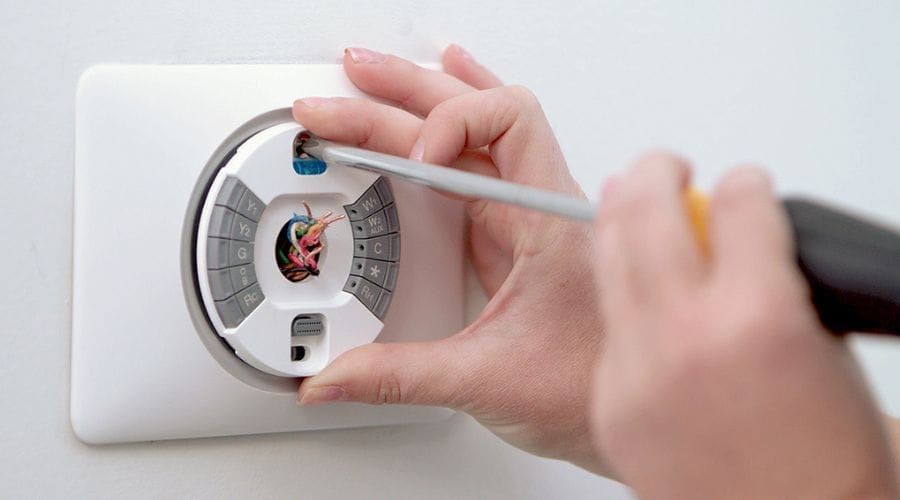
- Turn off HVAC power: Always cut power before touching wires to prevent shock/damage.
- Remove old thermostat: Document existing wire placements using photos/notes for reference.
- Connect wires: Attach R, W, Y, G, C wires securely to matching terminals on new Honeywell unit.
- Screw mount & restore power: Secure thermostat on wall and turn power back on to test functionality.
- Tune & verify operation: Adjust temperature settings to confirm both heat/cool respond correctly.
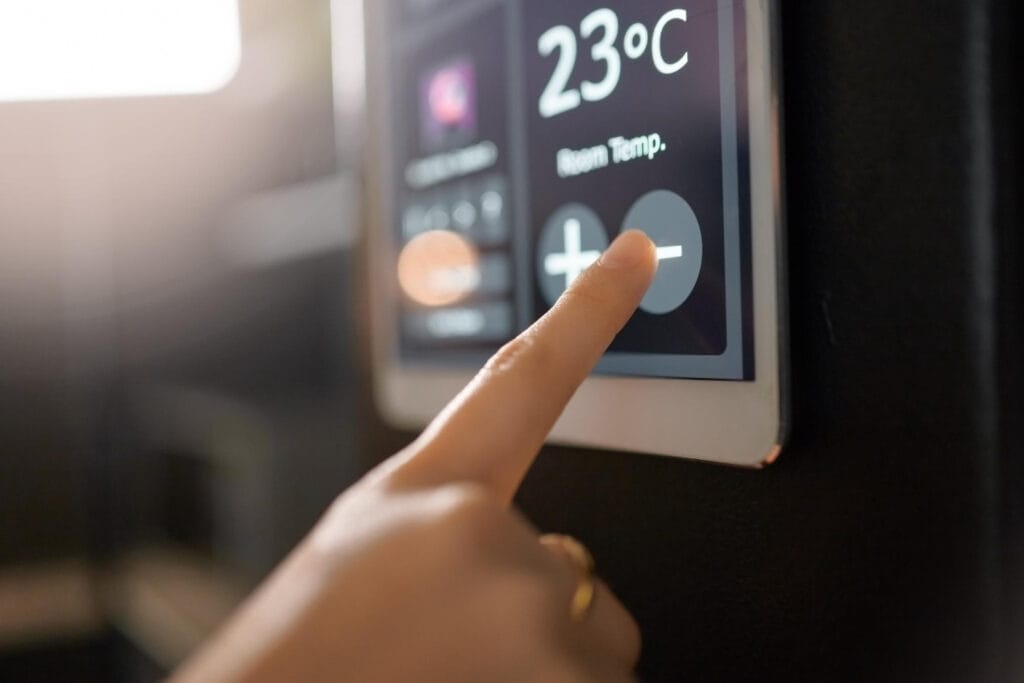
House Thermostat Wiring Basics: The Difference Between Digital vs Smart Thermostats (Wiring Considerations)
Digital Thermostats
- Easier installation — mostly same color-coded process as manual thermostats.
- Adds programmable schedules for day/night cycles → boosts comfort & energy savings instantly!
- Certain models require a C-wire connection for continuous backlight/power supply stability.
Smart Wi-Fi Thermostats (e.g., Honeywell Home Series)
- Sophisticated features like remote app control + learning schedules = ultimate convenience & savings!
- C-wire often required → provides steady electricity needed for Wi-Fi connectivity + advanced functions like Alexa integration .
- Must connect device onto secure Wi – Fi network link application smartphone manage remotely
(818)858-7080 . Proudly serving Los Angeles metro area with trusted residential commercial HVAC support !
Understanding House Thermostat Wiring Basics helps you identify wire functions, avoid errors, and confidently manage or upgrade your thermostat for better HVAC performance.
FAQ:
What is thermostat wiring and why does it matter?
Thermostat wiring connects your thermostat to your HVAC system using low-voltage wires. These connections send signals to your furnace, air conditioner, or fan to turn on and off, helping control temperature throughout your home.
What are the most common thermostat wire colors and their functions?
Typical thermostat wiring includes:
Red (R): power from the transformer
White (W): heat call
Yellow (Y): cooling call
Green (G): fan control
Blue/Black (C): common wire for continuous power (especially for smart thermostats)
What does a “common wire” (C-wire) do?
The C-wire provides a continuous 24 VAC power supply to digital and smart thermostats. Without it, the thermostat may lose power, fail to connect to Wi-Fi, or restart randomly.
Can I install a thermostat myself?
Yes, basic thermostat installation can be done with proper understanding of wiring and safety, but it’s important to turn off power before starting. For complex or unfamiliar configurations, professional HVAC help is recommended.
Why might thermostat wiring be confusing?
Different HVAC systems (furnaces, heat pumps, multi-stage systems) require different wiring configurations. Wire labels and functions can vary, so always verify connections with manufacturer guides or a professional.
What happens if thermostat wires are connected incorrectly?
Incorrect wiring can lead to malfunctioning HVAC operation, such as the system not responding to temperature changes, continuous fan operation, or damage to control circuits. Always match wires to the correct terminals.
Should I upgrade wiring when installing a smart thermostat?
Often yes — smart thermostats typically require a C-wire for full functionality. If your existing cable lacks a C-wire, you may need to add one or use an adapter kit.
Can thermostat wiring affect HVAC efficiency?
Yes. Poor or loose thermostat wiring can cause incorrect signals, leading to frequent cycling, inefficient heating or cooling, and higher energy use. Proper wiring ensures accurate communication between thermostat and HVAC system.
When should I call an HVAC professional for thermostat wiring?
If you encounter unfamiliar wiring configurations, lack necessary tools, or are unsure about proper connections, it’s best to have a licensed technician handle the installation to ensure safety and correct operation.
Do all thermostats use the same wiring setup?
No. Different types of HVAC systems — such as single-stage, heat pump systems, or dual-fuel systems — may require different wire counts and diagram layouts. Always refer to your thermostat and system manuals.